Author: Greg Shaw

  • Extrospect: Selfies, Isolation and the Messianic Spark

    —John, Walter and Greg (with a little help from my friend)

    ” A woman must continually watch herself. She is almost continually accompanied by her own image of herself… she can scarcely avoid envisaging herself walking or weeping.”

    John Berger — Ways of Seeing

    “The adjustment of reality to the masses and of the masses to reality is a process of unlimited scope, as much for thinking as for perception.”

    Walter Benjamin — The Work of Art in the Age of Mechanical Reproduction

    “What once signalled vanity and narcissism is now the very currency of social participation. It is not a good look for the world, ngl.”

    Greg Shaw — Extrospect: Selfies, Isolation and the Messianic Spark

    Not that there were packets of printed photographs kicking around my youth, but sometimes there were some. There was a value involved; beyond the cost from beginning to end (which was significant), there was a moment trapped in film and image that was yet to undergo the radical devaluation of the present. You picked up an envelope of prints, could be 24, could be 36, and would eagerly look through them often forgetting what you might have even taken pictures of, quickly noting the absolute rejects, and any that might have been a triumph.

    And of course, you looked for images of yourself.

    But it was different – you would not want to be seen doing so. You would not shuffle through the pack looking for where you might appear, and you would not get caught lingering over a picture of yourself. That was vain and egocentric. It reflected an unpleasantness that was not culturally acceptable. Cast forwards two decades to the carefully taken, selected, curated plethora of selfies, from casual individual to 100k follower influencer; fashion, food, sports, music, art, goodwill, soft-porn, literally “whatever”, and note the ego-centric, underlinings of a so-called “meaningful” life, this is me, I am here, this is for you (but really for me). Of me, for me. Me, me, me.

    The cultural inversion that has taken place is nothing short of staggering. What once signalled vanity and narcissism is now the very currency of social participation. It is not a good look for the world, ngl.

    [I have been contemplating this change and the plague of the selfie but instead of decrying and lamenting the situation (so mature) I turned to two of the king-pin theorists of the twentieth-century, guides to understanding representations of ourselves and mechanical reproductions: John Berger, the critic of images and the gaze, and Walter Benjamin, the philosopher of aura and reproduction. Berger’s argument [was] that the female] subject was not simply depicted as she was, but as a representation of how she might be, in the knowledge that she is being watched. She is both the object of the gaze and the subject of her own self-surveillance. It is arguable, that in some regard the selfie is empowering and gives agency to this subject. Benjamin asserted that the reproduction of artworks (in this instance the portrait) causes a loss of “aura”, their unique presence in time and space. It’s possible that for Benjamin, the selfie was the logical endpoint of mechanical reproduction to this process — born as a copy, ready for circulation, replication and deletion. Here, the aura is not diminished, but absent.

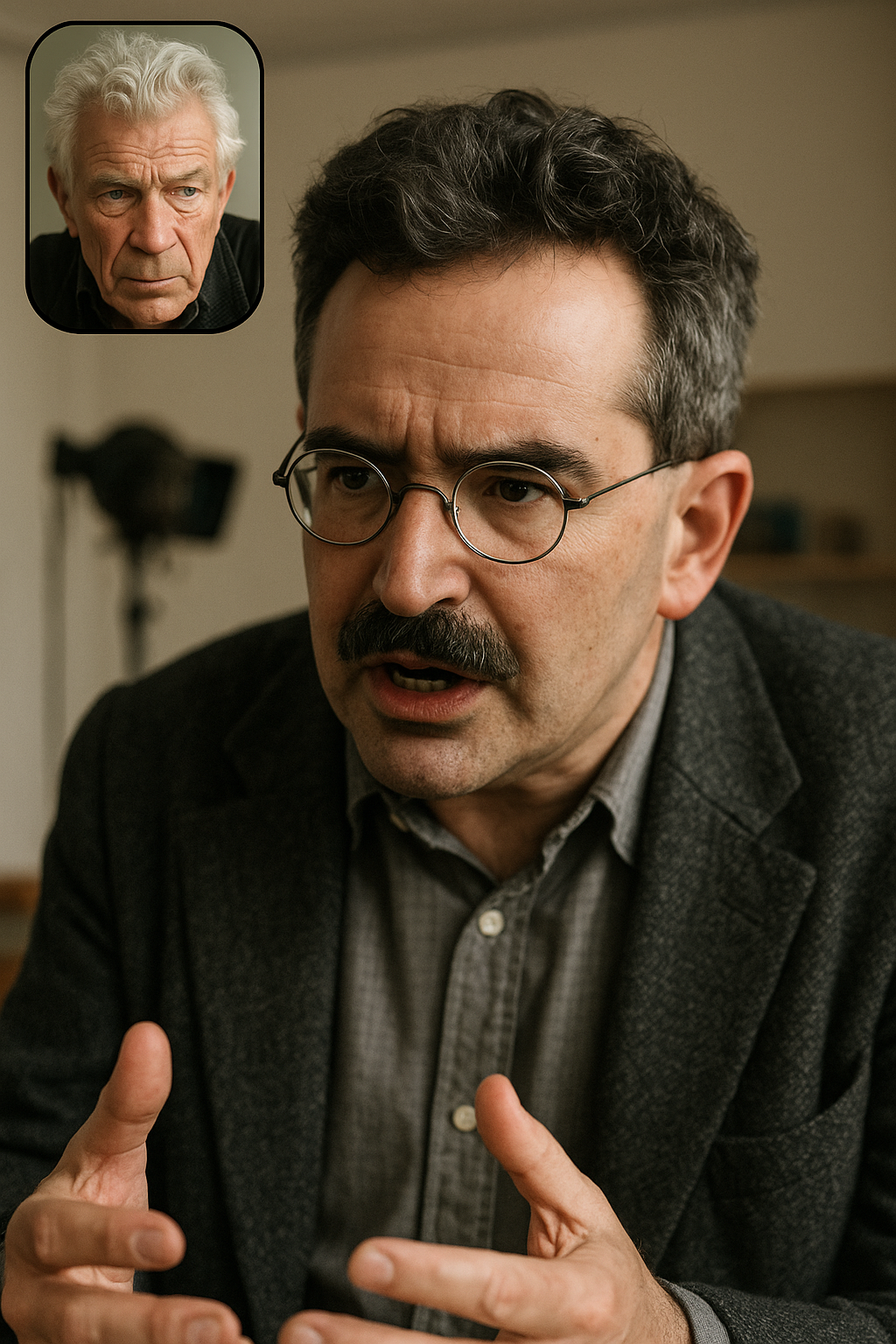
    In the spirit of a “loss of aura”, and an age of mechanical (re)production I turned to Chat Greg’s Play Thing and had really a most enjoyable evening. I controlled and adjusted parameters, manipulated a bunch of responses, interacted for a night and evolved a fake conversation between the theorists about the subject.

    Fake, writing about Fake things.

    Berger and Benjamin Scroll Instagram

    What follows is an imagined dialogue between John Berger, author of Ways of Seeing (1972), and Walter Benjamin, author of The Work of Art in the Age of Mechanical Reproduction (1936). It stages their voices in the present, reflecting on the flood of selfies in our digital age.


    Berger:

    “These millions of images of faces, held at arm’s length, do not show confidence. They show hunger. The omnipresence of the selfie is testimony to a loneliness we dare not name. Once, recognition came from the embrace of family, the closeness of comrades, the presence of neighbours. Now, people prove their existence by offering their likeness to an anonymous crowd. I am here, I matter — said to no one in particular, to everyone and no one at once.”

    Benjamin:

    “You see alienation, John, and rightly so. But I also see a different current running beneath. Every selfie is a trace, a fragment of life otherwise invisible to history. In each image a weak messianic power stirs: the power to redeem, to inscribe one’s presence against erasure. A factory worker, a refugee, a teenager in a village — their likeness circulates where once they would have vanished unrecorded. The banality of the form hides its potential.”

    Berger:

    “But Walter, these images are devoured by the platforms that host them. They generate revenue for corporations, not solidarity. The gesture of seeking connection ends in further isolation. The selfie replaces presence with appearance, companionship with spectacle. It aestheticises absence.”

    Benjamin:

    “True — yet dialectics always contain their reversal. The very image that is consumed as spectacle may later become testimony. A protester’s selfie today, mocked or ignored, may tomorrow be evidence of resistance. Even a frivolous image can, when history shifts, reveal what was otherwise lost. The trivial frame may hold a fragment of redemption.”

    Berger:

    “Then we are agreed on this much: the plague of selfies is not merely narcissism, but a symptom of our times. It tells us of loneliness, of the erosion of communal recognition. But it also tells us of longing — longing to be seen, to be remembered. That longing itself is not contemptible. It is human.”

    Benjamin:

    “And in that longing, we glimpse both despair and hope. The despair of fragmentation, and the hope that even the smallest image may, one day, illuminate the forgotten. Alienation, yes — but also the faint spark of messianic redemption.”

    [They fall silent for a moment, watching the endless scroll of faces on nearby phones.]


    Berger (softly):

    “It is strange, isn’t it, Walter? Once, images were rare — painted to preserve status, devotion, memory. Now they arrive in floods. And yet, the more there are, the less they seem to connect. Each face is vivid, but the gaze passes over them like water on glass.”

    Benjamin:

    “Yes, John. The flood both drowns and preserves. Each image is trivial in isolation, but together they form an archive of the ordinary. A century from now, a historian may stumble upon these faces and see, not spectacle, but testimony: how people dressed, how they smiled, how they wished to be remembered.”

    Berger:

    “But what kind of memory is it, when the image is crafted for strangers? The child once showed her face to the family album. Now she shows it to no one in particular. The audience is diffuse, anonymous. That is why it feels so lonely.”

    Benjamin:

    “And yet the loneliness may itself be redeemed. For even in anonymity, there is the spark of presence. These countless self-portraits are, in their own way, a weak messianic gesture — proof against erasure. They whisper: I was here, in this body, at this moment.

    Berger (pauses, nodding):

    “Perhaps. But still, the noise of circulation is deafening. To be seen has become a compulsion, and absence a kind of shame. The price of visibility is that one is never allowed to vanish. Even solitude must now be posed, posted, performed.”

    Benjamin:

    “That may be so. But recall, John: I always believed redemption hides within catastrophe. Even in the flood, one may find fragments that glimmer with meaning. And so perhaps, in this endless scroll, lies the faint chance that some overlooked life will shine through, carried forward by the very medium that consumes it.”

    [They both return to watching the glow of the screens, their silence heavy, but not without hope.]


    Berger and Benjamin Join the Feed

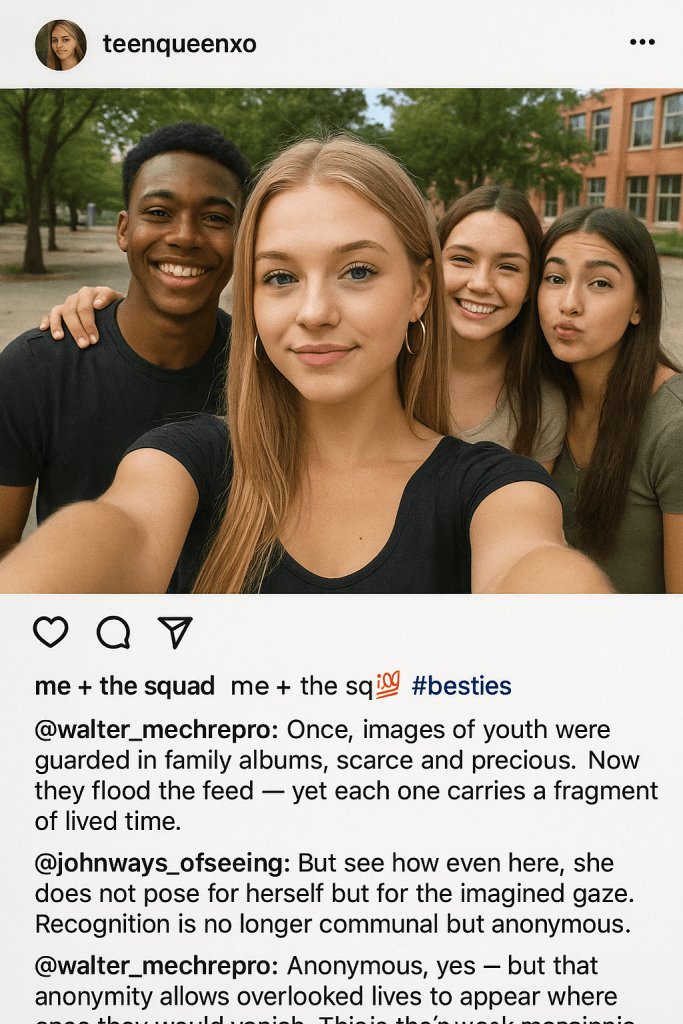
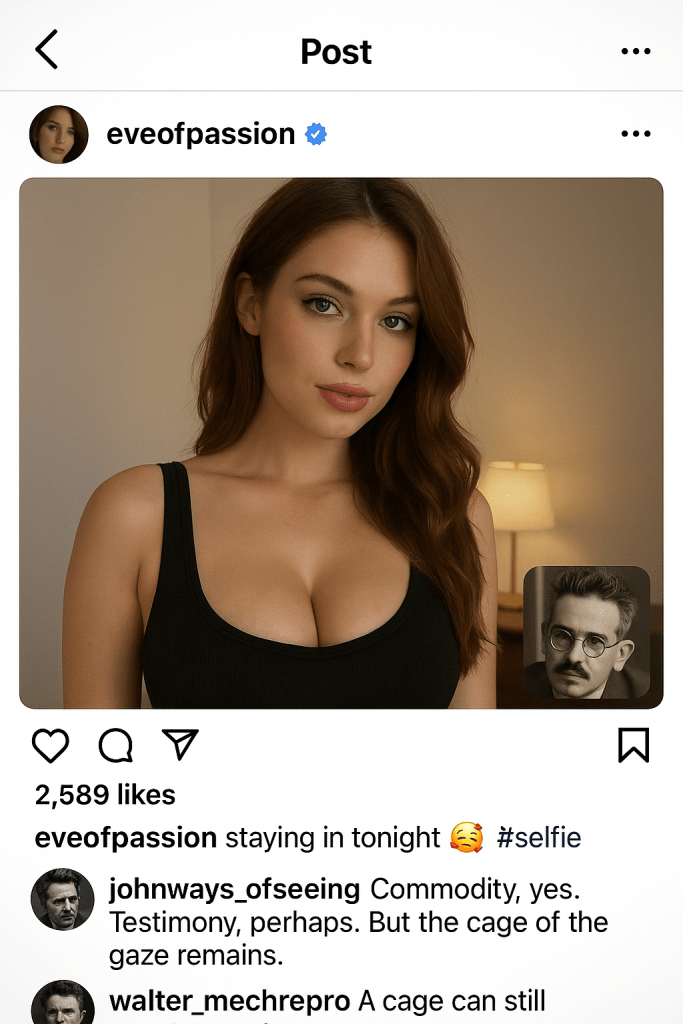
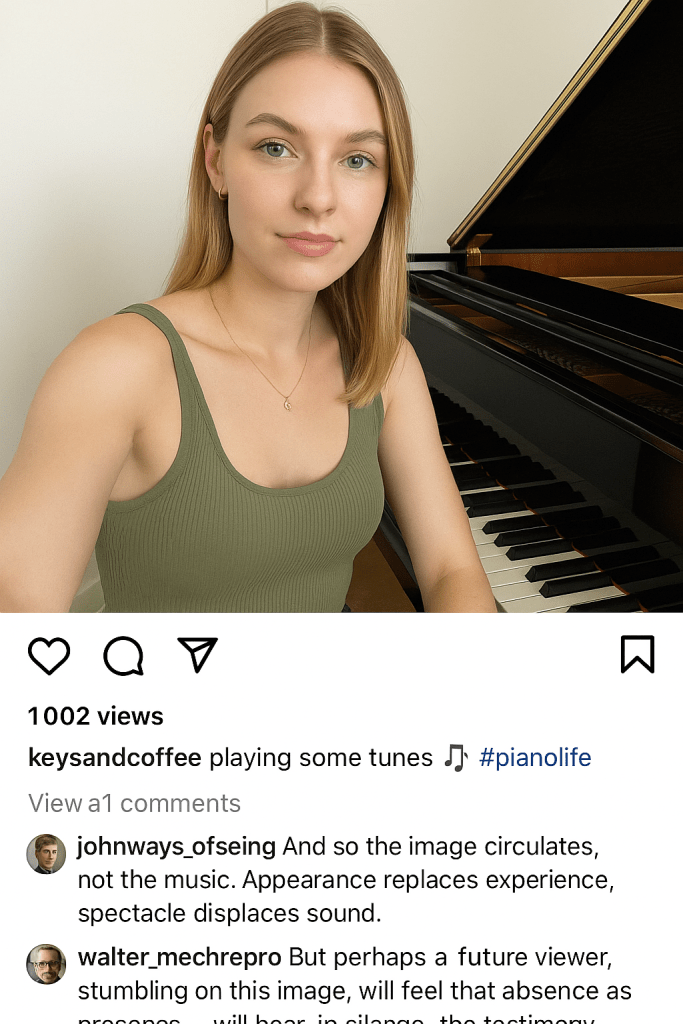
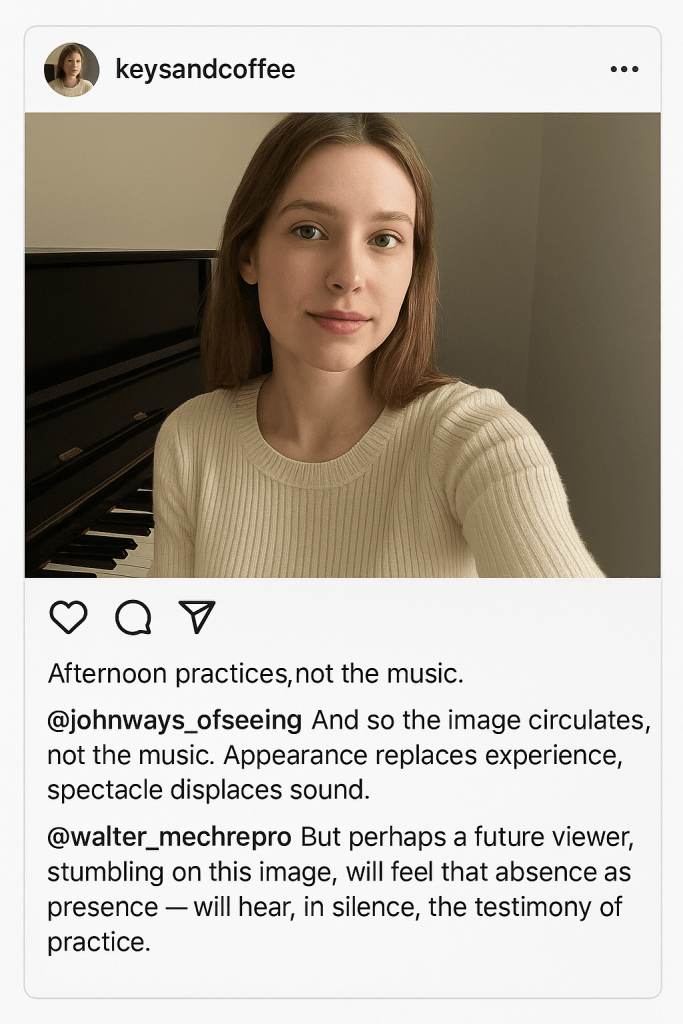
    I felt, with a little more help, I could do more to really nail this dialogue. In the sprit of the age of sheer reduction, I thought John and Walter could comment on actual IG posts? So, with refined parameters, and imagined IG accounts for our theorists, and some influencer accounts from the blue, we set to work. The process took a while to get to where I wanted, with the final instruction below:

    “Let’s re-stage the conversation we just developed (Berger’s selfie as testimony of isolation and Benjamin’s selfie as messianic possibility) as if it were playing out in the comment sections of Instagram posts. We’ll use the same handles we invented earlier:

    @johnways_ofseeing , @walter_mechrepro 

    And drop them into the influencer accounts we created:

    @fitgrind365 (fitness influencer, @teenqueenxo (teenager), @velvetafterdark (OnlyFans model), @keysandcoffee (pianist)”
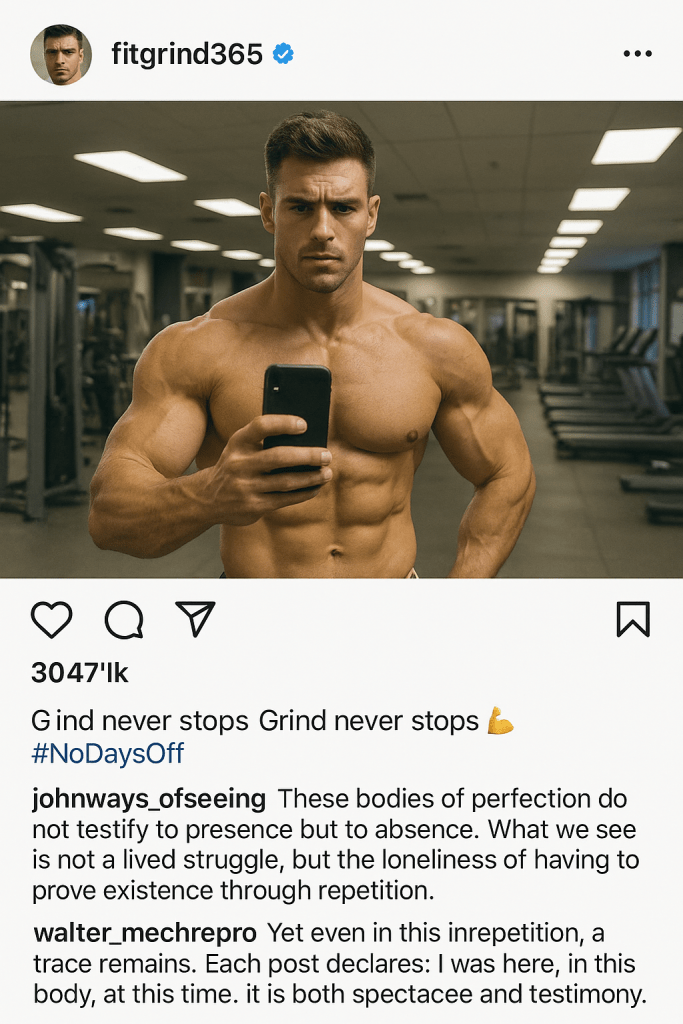
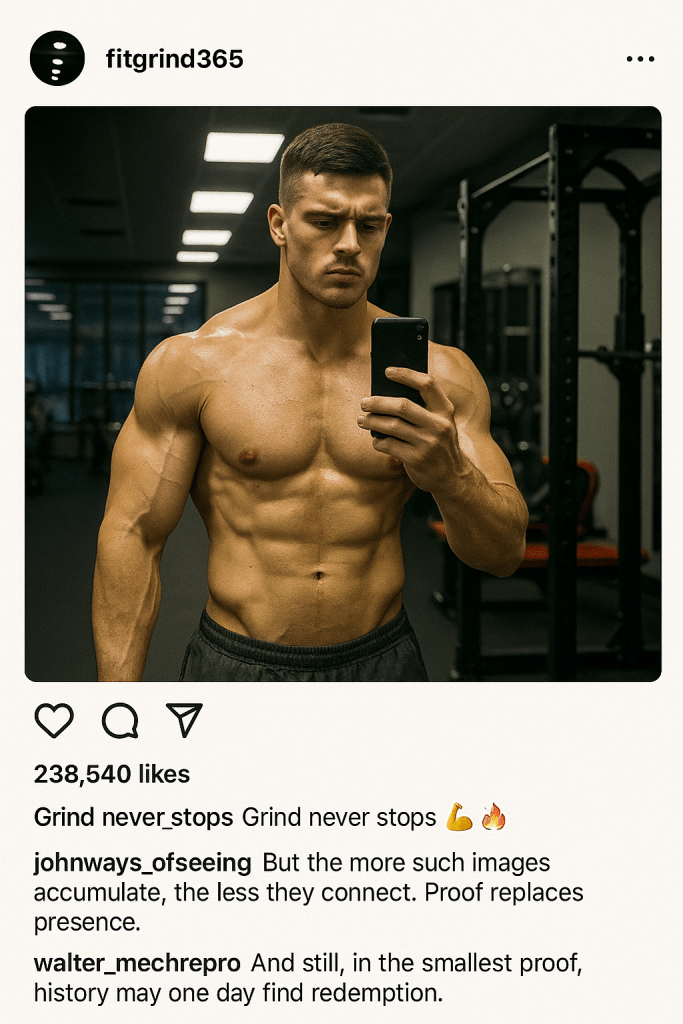
    It is, I think, the inconsistencies and flaws that make these so intriguing. There is so much that could be unpacked, the mind boggles, not least that these are entirely generated images, not a screen shot with text comments. There is so much that is alarming but as much as that is the results, I think have been worth the effort. I am in two (or more) minds as to what the result would feel like if I had made it “accurately”, without imperfections and relying on my own intellect entirely. Different, better, worse. But it would have missed the enquiry embedded in the form that this possesses, for whatever that is worth.

    G ind never stops Grind never stops

    Greg Shaw, Harare.

  • The Songs We Used to Sing

    “Weathered, 2024.
    Mixed Media on Canvas Covered Board, 510 x 420cm

    My first encounter of Olly French was an email from him that arrived whilst I was hairless in sub-zero temperatures in Midrand, staying with wonderful family in an equestrian estate and having my veins and cells burnt away by chemo (something I am eternally grateful for). I had various online projects at the time: getting my first L6 Hellenic pupils through their A Level exams, via email and the newly emergent WhatsApp on my Nokia phone with qwerty pushbutton keyboard; creating my first line of iPad works and being what must have been Lance Armstrong’s very last supporter (how heroes fall). Olly was undergoing his own health challenges, and he introduced himself to me and we had a meeting of minds. We also had a sharing of the things people say to you when you’re sick (“I just know it will be alright- I don’t know how I know it, but I know it…”).

    Twelve years or so later, I had the singular pleasure of curating Olly’s show, The Songs We Used to Sing at The Arches @ Aberfoyle. It was splendid, the most beautiful works in an extraordinary gallery and I was very proud to be an associated with the exhibition. Olly’s paintings are meditations, they embody the deep thought, searching and investment of the artist who became my friend. It was a pleasure to write about his work for the catalogue, which I have posted below.

    The Songs We Used to Sing

    There is a space beyond words and language and outside of symbolism and representation. Skirting the edges of that space is a type of hypnogogia, where a confluence of the suggested forms, elements of colour, lines, space and depth bought about by the artist, and the perceptions, experiences and intuitions of the spectator meet. Between the artist’s rich lexicon and the vulnerability of the spectator,  a wordless dialogue is invoked and a fertile place of meaning emerges. Here, there is nostalgia. Here, there is memory. Here also, are the traces of shared experiences, connections, trauma and vulnerability. Predictably, contradictions are inherent; elements of loneliness, isolation and alienation also inhabit this place. 

    In this place, the present is always, inevitably and unceasingly, the past. Within this place, amidst the complexities and harmony, the almost-defined, allusions and veiled ideas, are enshrined the songs we used to sing. 

    The Arches @ Aberfoyle is proud to present the first solo exhibition of Olly French. It is a body of work created over the last several years, built on the foundations of a lifetime engagement with the visual arts, design and music. He has woven together threads that have their roots within both distant memories of previous decades, with others drawn from the staggeringly complex recent past and present of his native Zimbabwe. Like any of us, moments of trauma and ecstasy become embedded within the mundane of our histories and become part of our being, located within a context in constant state of flux. 

    French’s work is a contemplation of not only what it constitutes to be, but what it constitutes to have been, in place and time. Through multiple layers the artist  explores a sense of remembering and recognition within the passage of time, ever in motion like the wake of a vessel; where the intersection of present/past is a tenuous, indefinable moment and where the transition between the clarity of the recent past and the vaguer distance is imperceptible. But the undying, expanding waves of energy go on, intersecting and impacting, becoming part of the unending dialogue of existence. 

    There is no claim to any universality of language, this is a personal and introspective series of works. Nevertheless, within the multitude of human endeavours the visual arts hold a particular territory, one in which a sense of non-linguistic communication is possible. Within these works, the spectator will find aspects of recognition and understanding, and it is in these elements that the true value of French’s work resides. Within the harmony and occasional discord, the colour fields, forms, depths and volumes, for a moment, it is possible for the viewer to see that this is our place, our time, our history: Where you have been, so have I; what you have seen, so too have I; what is in you, is also in me. 

    What you have so eloquently described, are the songs we used to sing.

    Greg Shaw,

    Curator.

    7th September, 2024.

  • Grey-Zones

    The following is a short text accompanying a body of work made during the course of last year. All of those works will be posted under “recent works”, elsewhere on this site in the weeks to come. I had initially intended these works to be shown together at some point, but with the passing of Helen and Derek and the close of Gallery Delta, momentum took a slightly different direction. Clay Pot was shown at Artillery, Lines in Space was sold and War Table is currently on exhibition at the National Gallery. So I thought to post this in the meantime, and time will tell what transpires in months to come with regard to the whole body of the work.

    Recently (within the last decade), I wrote about the emergence of the materials in these works. I had also written in a little more detail about the first work mentioned Carving Lines. The text below looks more closely at idea of a border and borders in relation to those enclosed or excluded by such a boundary and the implications of this and the works that were created within these ideas.

    Greg Shaw,

    Harare, November 2022.

    Introduction

    This body of work began as an interrogation of the national boundary of Zimbabwe; a questioning of The Border, and borders in general, markers of the limits of political jurisdiction of the sovereign state and its cultural, socio-economicand socio-political conditions. As work progressed, “border” emerged less as a boundary or containing/excluding structure, but as a signifier of the state, insofar as it represented the structures (both physical and ideological) according to which conditions are manifest, becoming mediator or interface between state and citizen. 

    Both the structures and the relationships that evolve around this border are in a constant state of flux and negotiation, from where the title Grey-Zones emerged. Three interconnected themes became apparent; the nature of the structure itself,  the implications and conditions wherein the border acts as mediator between the individual and state, and the ramifications of these conditions at an individual level – what it is to stand (metaphorically) on one side of a structure or another, or to occupy a position of liminality.

    Lines in Space

    Whilst much of the work employs media commonly associated with borders and boundaries, the idea of ‘border’ should not be reduced to a structure or physical boundary, nor be seen to simply direct a social or cultural response. George Simmel (in Schimanski 2021) argues that the boundary is not a   “spacial fact” with sociological consequences, but rather the opposite. Whilst the boundary may be understood as the manifestation of cultural, sociological or psychological phenomenon and might be clarified by being seen as a line in space, reducing it to such undermines the dynamic aspect of the border, and the temporal aspects of meeting and dividing. We understand the border as emerging through the consequence of human agency, and more importantly, our efforts to clarify and delimit the border contradict the fact that borders exists in a constant state of flux, are temporal and in a process of being conditioned by human agency.

    Fig. 1. Greg Shaw, 2021. Carving Lines, 2021.
     Mixed Media, 145 x 75 x 30cm

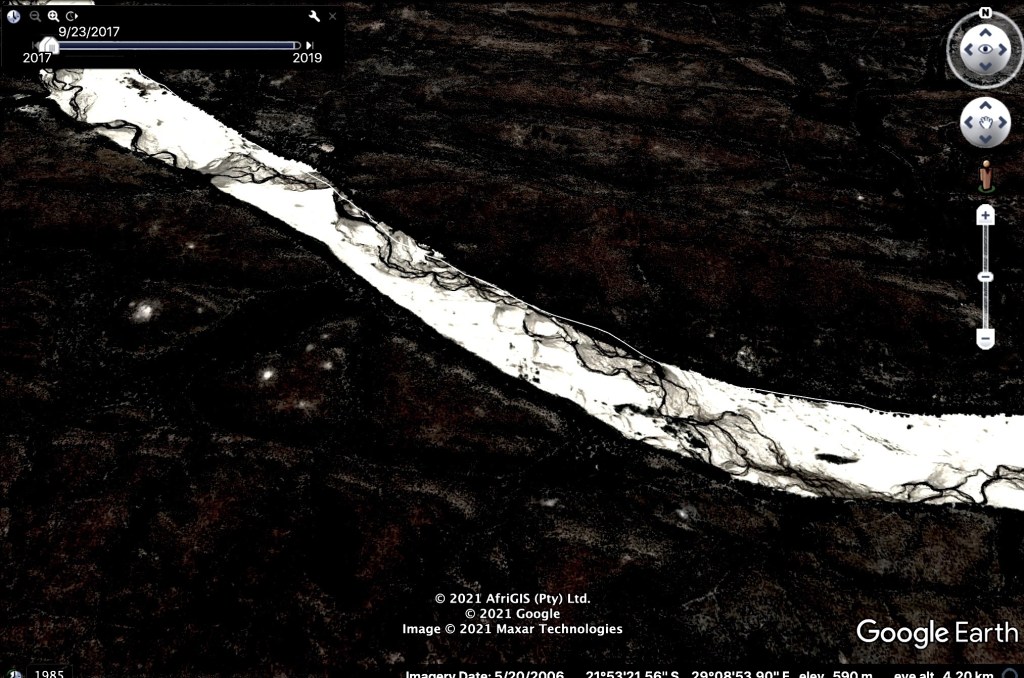
    Carving Lines (2021, Fig.1) refers primarily to the “line in space”, the marking and codifying the border; an acknowledgement of the violence of the action. The materials and form refer to historical aspects of the process. Images drawn from Google Earth speak to the all-seeing, elevated viewpoint that emerged with the colonial gaze and the removal of that eye from the place of the division, as well as the present structure that identifies the porous and assaulted division between Zimbabwe and South Africa bringing into focus the nature of state boundaries in general.

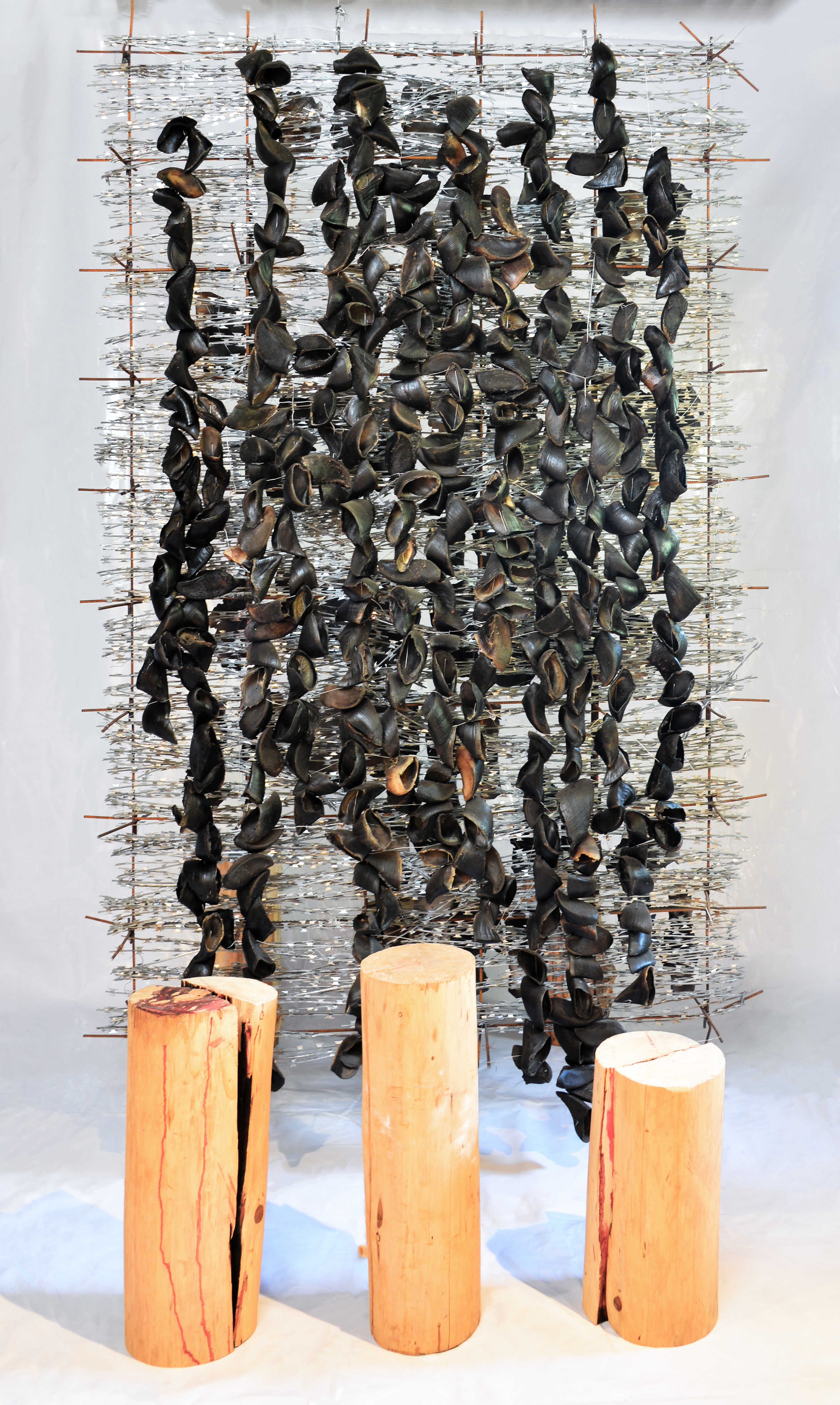
    Fig 2. Greg Shaw., 2021. Lines in Space. Cattle Horn, Steel and Paper. 150 x 200 x 40cm

    Whereas the work above calls the physical attributes into question, Lines in Space (2021, Fig. 2) interrogates the porosity of the boundary, questioning both the crosser and those who would construct the barrier. The dismantling of the borderline and the literal opening of the “barrier” allows the spectator to pass through the work, interrogating the process of ‘crossing’. The boundary disintegrates and re-forms according to the spectator’s position, remaining in memory as both a visible line and as loss of form.

    The process of crossing is elucidated. Schimanski (2011:3), observes that the splitting of the border (when crossing) compromises its status as a barrier, revealing itself as a passage, consequently affirming and denying the border. The work presents not only the opportunity to consider the boundary, but also the status of crossing. Through this process the relationship to the border (and those who erect/maintain/administer it) becomes dynamic and mutable and exists by virtue of the spectator’s own authority.

    The memory of the line formed and un-formed explores aspects of Schimanski’s Crossing and Reading (2010), in which he observes that our crossing allows us to “bring the border with us” (through experience, understanding and memory). Our perceptions of the border may change as we review our theories of the nature of the “structure”. The concept of the border as interface between citizen and state emerges and new narratives of both the border and the border crosser arise.

    Mediator and Interface 

    Within later works, the notion of the state as authority develops, with concepts proceeding from the writing of Houtum and Wolfe (Schimanski and Wolfe, 2019: 131), that the border represents an act of waiting; Waiting in terms of a “‘final border’ which involves degrees of “subjectification” and internalisation of the state by those who are based in a given territorial order, and through which citizens are included and being made…”. One in which two mutually reinforcing forces underline processes of opening and closure, inclusion and exclusion.

    Houtum and Wolfe explicate this concept through analysis of Kafka’s Before the Law, as well as Coetzee’s Waiting for the Barbarians. In the first, Kafka portrays and individual waiting before a state authority and the efforts of that authority to subjectify and control the individual. Through the latter, the authors elucidate the manner in which those maintaining the border-as-periphery have agency on those both within and without the structure, and the manner in which that conditions the citizen in regard to the state. Of significance is the term “citizening” which highlights the fact that the relationship between the citizen and the state is not an event but a process involving negotiations between parties with inherent complexities and dynamics.

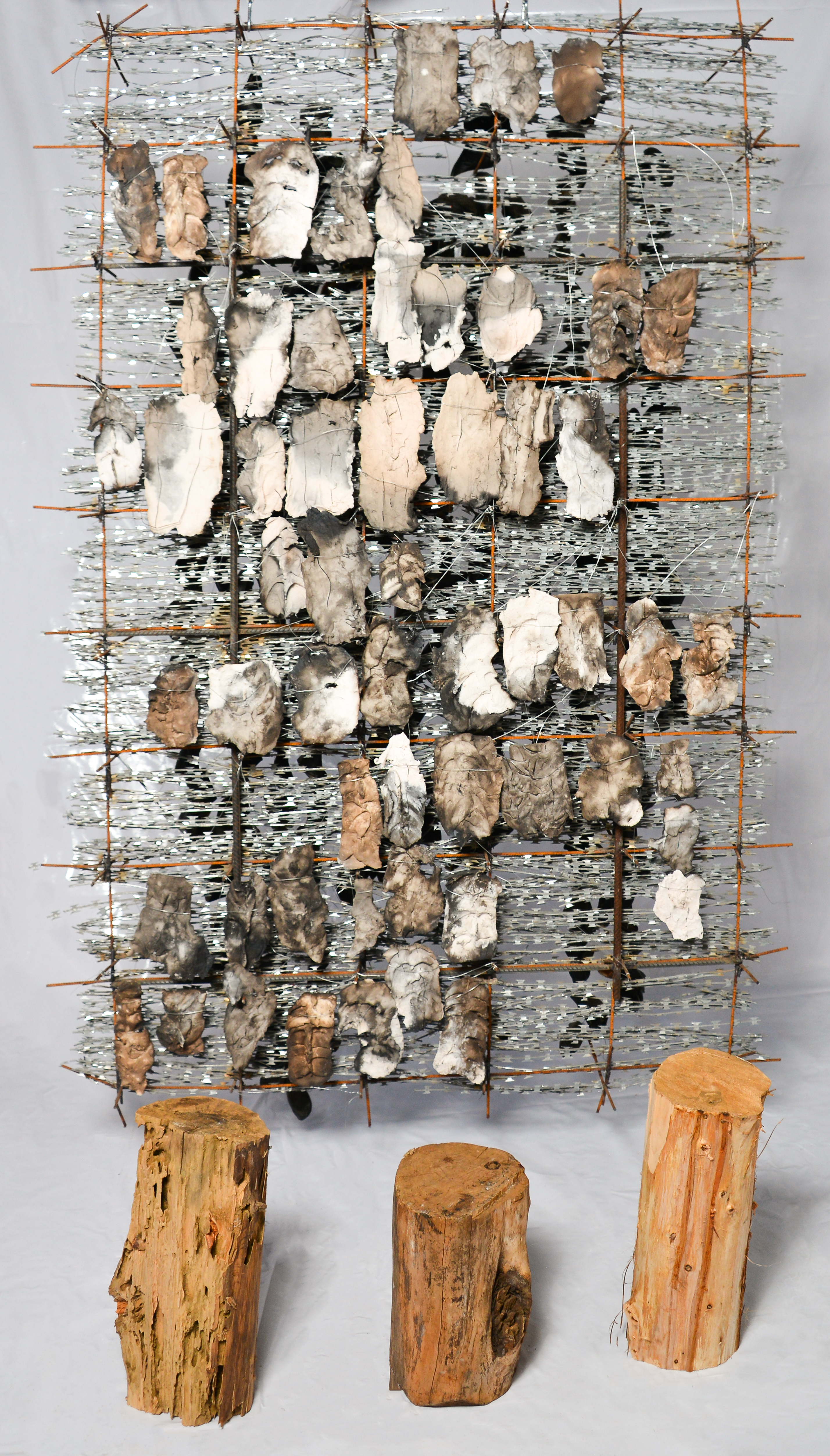
    Before the Law  (2021, Fig. 3) brings the spectator face to face with a structure. Unlike Borderlines, access within or through is denied and concepts of inclusion/exclusion become apparent. Through its layers and materials within Before the Law elicits ideas of partial inclusion and shared history are suggested but they are peripheral and speak to a core which has become more than the contributions of the two parties. The concept of “waiting” and the arrangement of stools suggest a surrendering or subjugation to the authority of the structures constructed through time, evolved,  unknown and inaccessible.

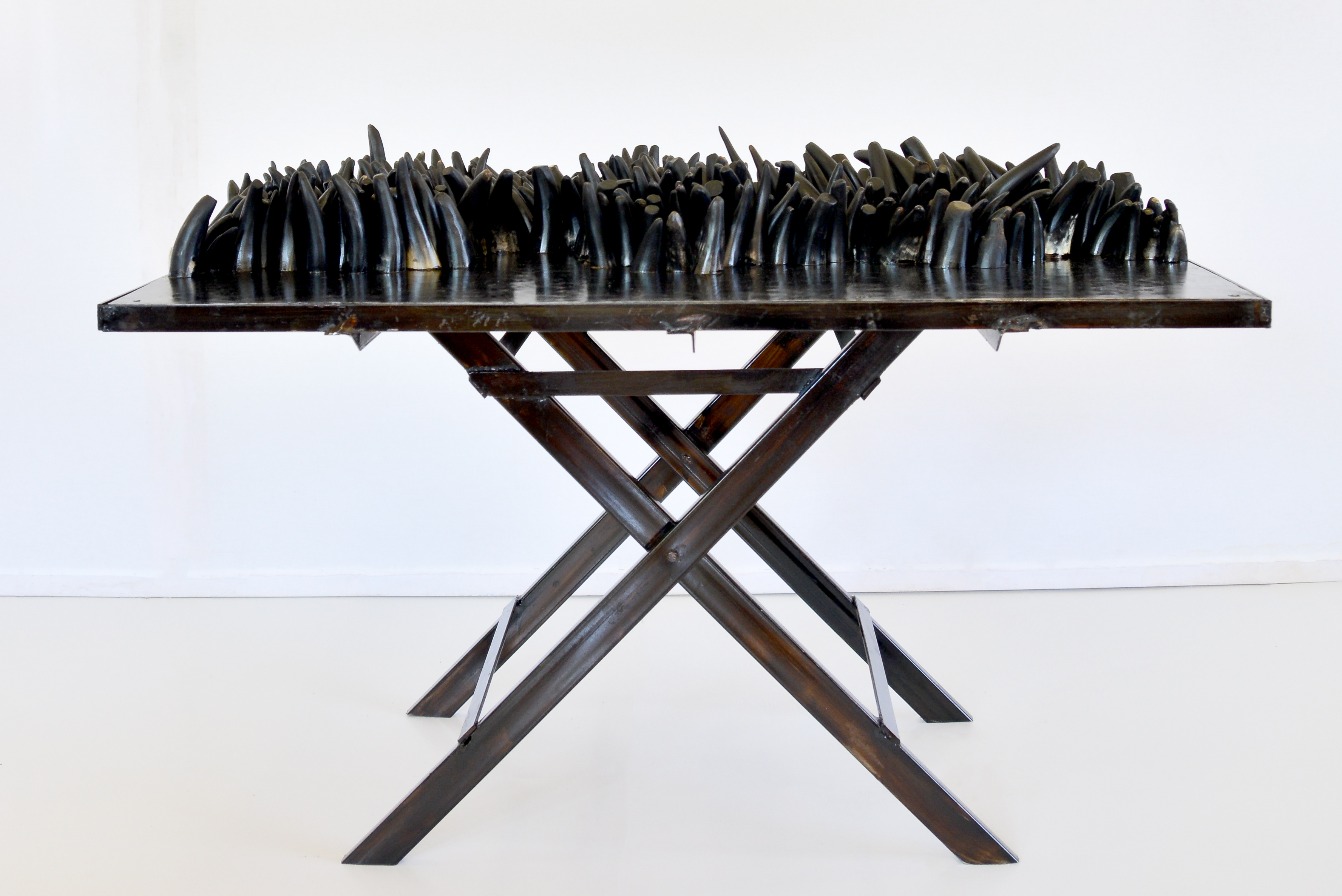
    Fig. 5. Greg Shaw, 2021. War Table. Cattle Horn, Aluminium, Steel and Bitumen. 
    100 x 125 x 88cm.

    A similar view of the authoritarian state, one of enforced homogeneity, over-seeing control, artificial order, separation and division is considered in War Table, (2021 Fig. 6). The work recalls not only the plotting tables employed in warfare, but also a social order planned from a removed position, seen from what Scott (1998:57) refers to as a “God’s-eye view, or view of absolute ruler”. In contrast to earlier works, the viewpoint is outside; removed, transcendent, denying interaction.

    Individual Concerns

    Nine Buckets (2021Fig. 7) responds more closely to the human element, drawing from a specific protest in 2021. The objects explore the nature of resources, access, administration and control, considering the basic needs and rights of the individual in direct relation to the structures of the state. The symbolic and functional items reference the impact of decision making and abuse manifest within daily existence. 

    Fig. 7. Greg Shaw, 2021. Nine Buckets. Mixed Media, Dimensions Variable

    The means in which authority is enforced is questions within Fences (2021, Fig. 8), looking critically at the relationship between individual and state and the wider apparatus, including the humanity intertwined within this matrix. The work comprises 10 “posts” – hand-held spikes such as previously employed by the traffic police (they were banned on the 13th May of this year, following the death of four people in a spike related commuter bus accident (New Zimbabwe [O]). Insofar as they are less “artistically” than “functionally” created, they are understood as both as found objects and versionswith similar origin to the implements employed by the police: Homemade tools built for control at the whim of the individual. Unlike an object such as a button or handcuffs, mass produced items that are sanctioned by authority, the posts of Fences, both through their unique form and their manner of creation interrogate the nature of the individual who chooses to create, employ such an item. 

    Fig. 8. Fence, 2021. Steel. 160 x 126 x 30cm

    There is the collective aspect of state organisation of both the authority and the citizenry and the ongoing balance and negotiation between the forces. However, within Fences  the individual seems to be brought into question, this is a breakdown of the balance of us and you (pl), becoming me and (vs. against?) you (s), an interrogation of the line that demarcates an established set of behaviour and responses at an individual level, but underlined and endorsed by the structures on whose behalf they operate.

    Conclusion

    The investigations into borders in the work above recognise the complexity of the relationship between individual and state and the dynamic, mutable conditions of existence. The work considers the nature of the boundaries, the transformation of these through their crossing, and the manner in which they include and exclude on both a collective and individual level. Through media, metaphorical meaning is explored, through the perspectives of both the individual and the state. What emerges is an enquiry into aspects of borders, their origin and the manner in which they condition contemporary existence. 

    List of References

    New Zimbabwe [O], 2022. “Police boos Matanga bans use of spikes”. Available at http://www.newzimbabwe.com/police-boss-matanga-bans-use-of-spikes-by-traffic-cops/ (Accessed 2 November 2022).

    Schimanski, Johan. (2010).  Border Images, Border Narratives: The Political Aesthetics of Boundaries and Crossings.Manchester: MUP.

    Schimanski, Johan. (2011). Crossing and reading: Notes towards a theory and method. Nordlit. DOI: 10. 10.7557/13.1835. Available at: https://www.researchgate.net/publication/33417018_Crossing_and_reading_Notes_towards_a_theory_and_method(Accessed 4 February 2021).

    Schimanski, J. and Jopi Nyman (Eds). (2019.) Border Images, Border Narratives: The Political Aesthetics of Boundaries and Crossings. MUP: Manchester.

    Schimanski, Johan, and Stephen F. Wolfe., 2013. “The Aesthetics of Borders”. Assigning Cultural Values. New York: Berghahn.

    Scott, James. C. 2020. Seeing Like a State. London: YUP (Veritas Kindle Edition).

  • Carving Lines

    Carving Lines, 2021. Mixed Media, 145 x 75 x 30cm. Photograph, David Brazier

    This ongoing interrogation into concepts of borders has not, so far, been straightforward. This is not surprising, like any contemplation of ideas of consequence (I don’t mean mine…), there are never simple answers, and the more you look, the more daunting it becomes. Even at a very shallow face value, answering questions such as “should national borders exist?” (yes, sometimes, no…), demands that you take some position. And it’s unlikely, that with any iota of thought, that one might land on Lennon’s Imagine stance with anything other than an immature drifting through lala-land. Maybe I’m just not “dreamer” enough. It seems reasonable, that if you have a nation-state, and that you have a functional relationship with the mechanisms and structures that maintain its workings and ideologies, then you also have something to defend, and some form of boundary in this regard is worthwhile.

    It is equally obvious that achieving that relationship, for many people and many parts of the world, is just as “dreamy” as Lennon’s Imagings.

    Like most artists, I provide limited explication of my work. David Hockney suggests that the artist should protect some of the mechanisms of their work leaving elements of mystery – perhaps in the manner of a magician. I don’t presume to be in Hockney’s league, mind, or even in the same game, but I do feel that over-explanation becomes limiting, rather than opening. The work Carving Lines is the first of the border works to be exhibited, currently showing at Gallery Delta. What follows is not an explication of the work, but a scant scratching around some of the ideas inherent in the piece.

    As mentioned in previous posts, my thoughts emerged with the conception of the current national boundary and the manner in which it was created. We know that there were already divisions and territorial conflicts in the region prior to this point, but the 1884-85 partition resulted in divisions being codified on a map. The map stands as a move towards an “agreement”, or symbol or tool to determine and endorse who “owned” (maintained/administered) what part of the geography. The map becomes a locus for interrogation of these ideas, controversial as they are. Obviously, that it was created and imposed on the indigenous inhabitants with extraordinary disregard, should be the overriding line of enquiry through which everything else is considered – it has been my intention that the general character of the work suggests the violence of this event.

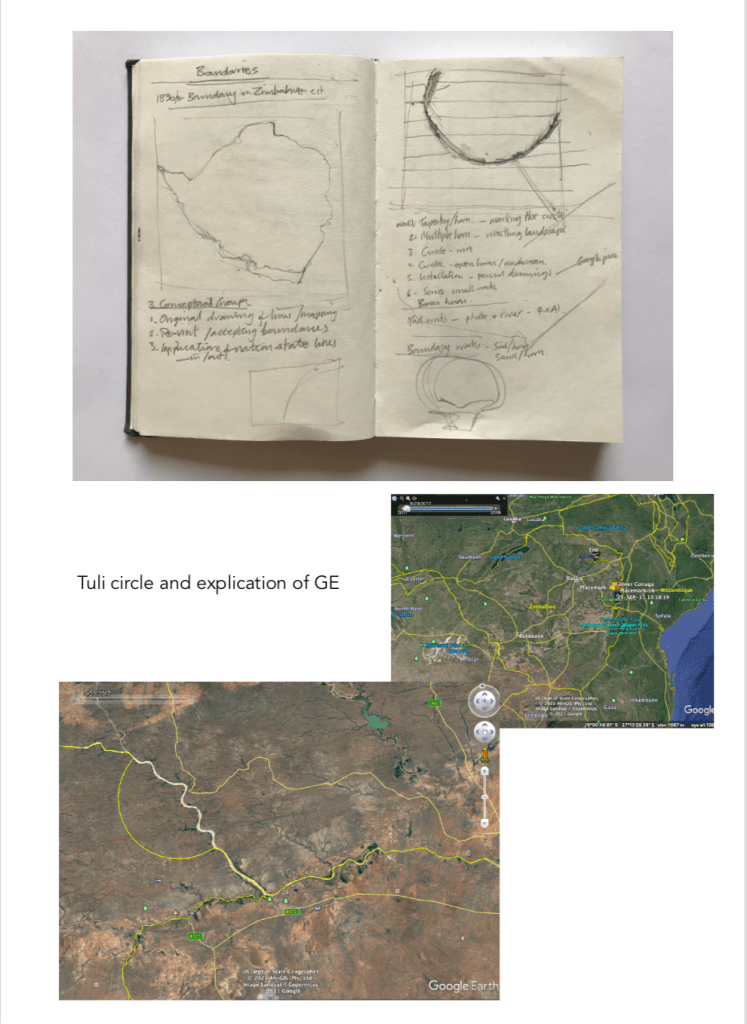
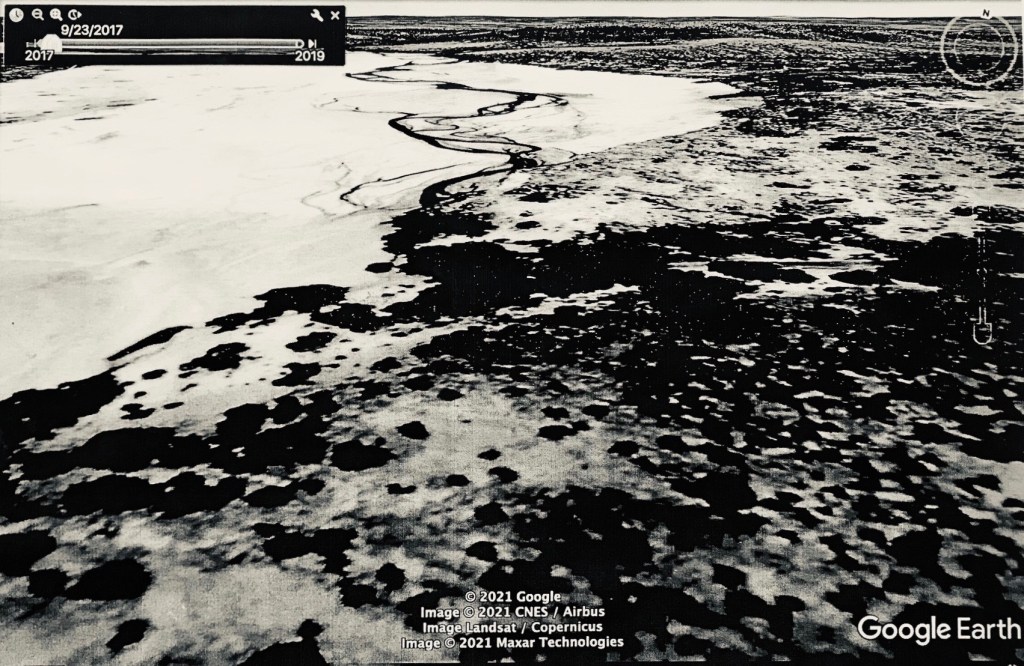
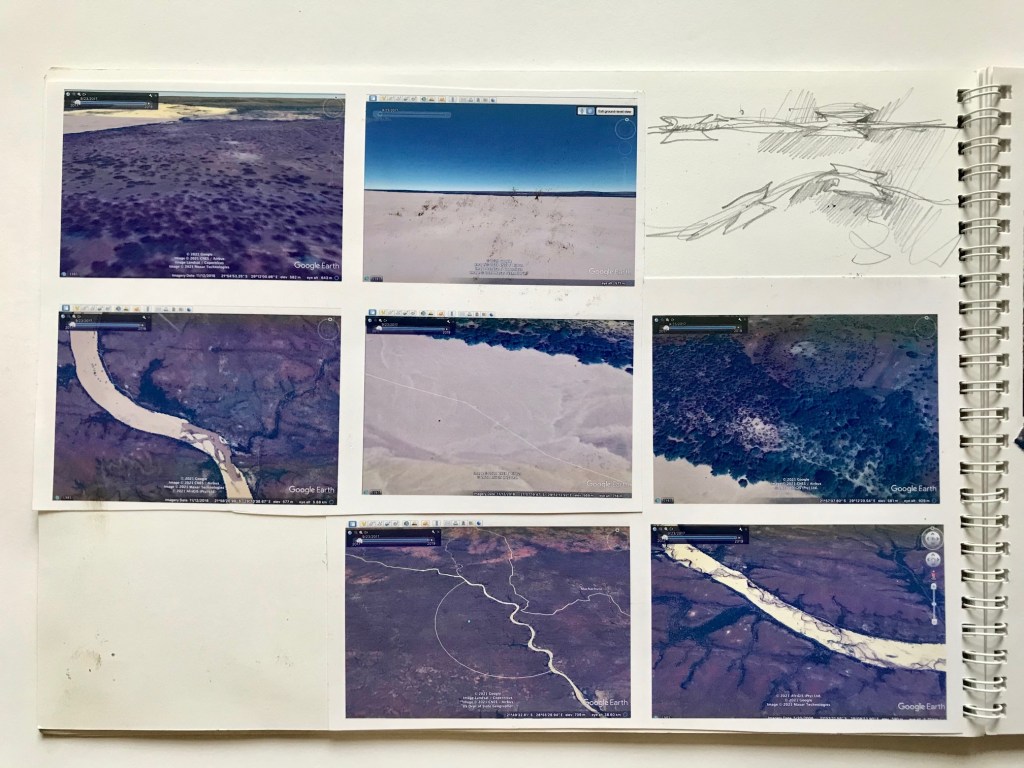
    I am intrigued by the idea that these territories were conceived (carved up/allocated/grabbed?) from a remote and mediated position – whilst the means in which this was achieved has changed considerably, the manner in which we understand territories via Google Earth, or similar, echoes the process and secondary understanding (if not the motive). I have a fascination with maps, marking trails and hikes and virtually exploring various geographical locations. My experience in this regard underpinned the idea that it is possible, with limitations, to garner an experience of a place virtually. As I explored Tuli in this way, I became aware that my “gaze” in some ways related to the processes of possession, exploration and experience of that location.

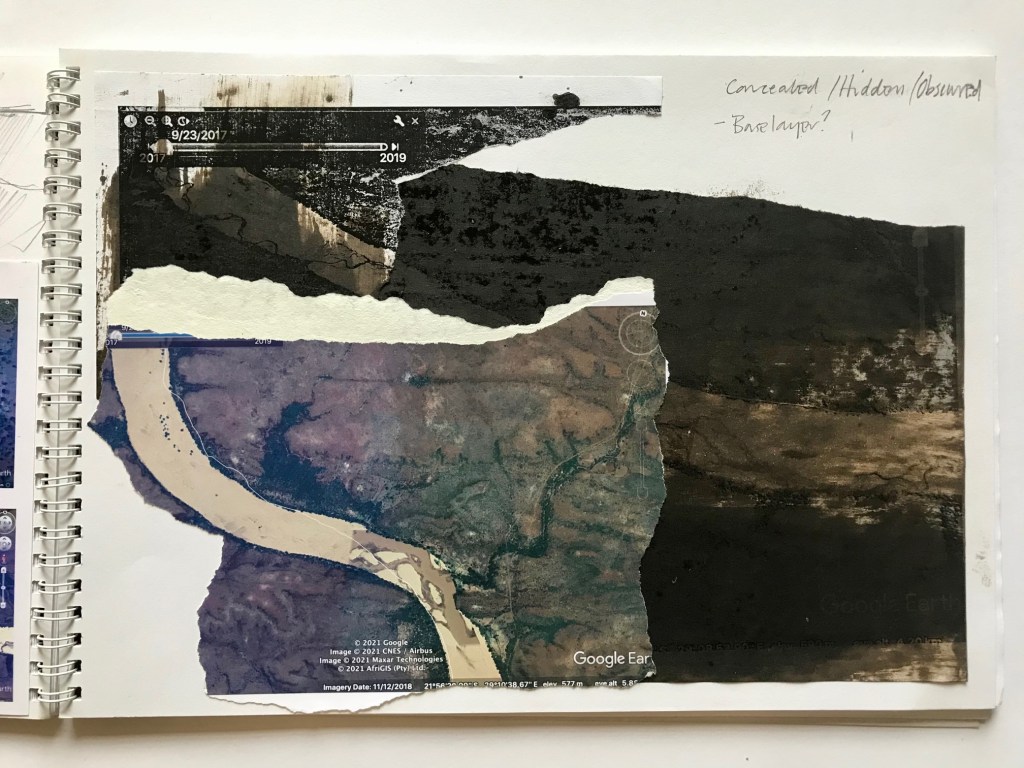
    The bottom layer of the work, blackened in bitumen, evolves from my own conceptions of the Tuli circle through that process (Tuli as a starting point is discussed here). It refers not only to my own experience, but refers too to that initial mediated experience of the 1880s and ’90s. The colonial gaze. The processes of virtual experience removes the human element from the imagery, and I had some concern that in a similar way to the colonial landscape paintings which often presented the landscape as uninhabited, my own work has arrived with similar lack of human representation as though they are not part of this discourse. Whilst that aspect is worth some discussion, I think that looking backwards, whilst the this is a positive aspect, as it precludes the possibility of me attempting to speak of another person’s experience or history. The mapping involved in that layer of the work established not only aesthetic elements, but provides an underpinning – perhaps a literal base layer to the ideas.

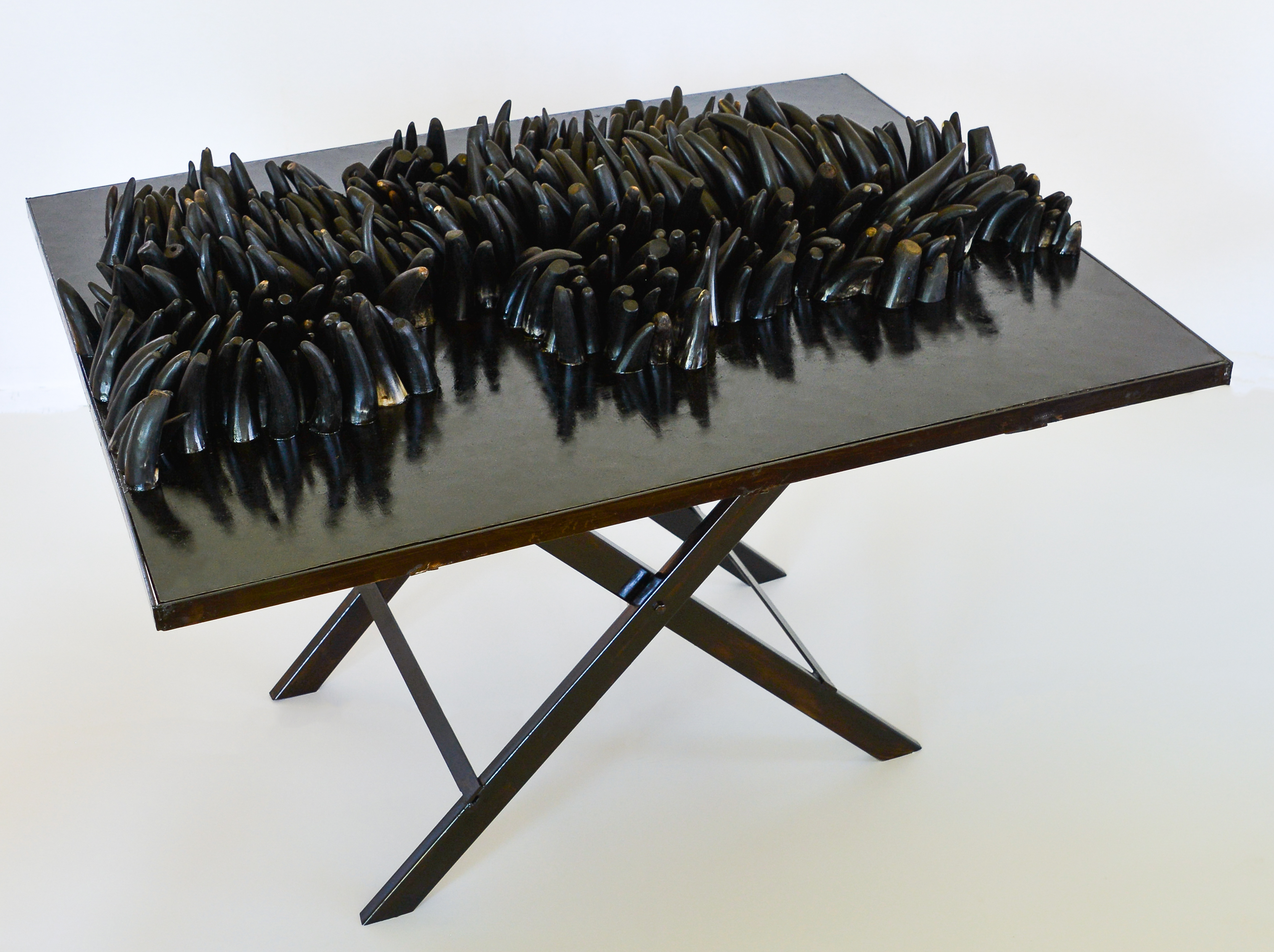
    The horns were a starting point for me, and have since evolved into something different. They initially acted as a visual metaphor, deriving from the oxen at the Tuli circle, but with many possible meanings emerging from that. The actual cleaning of them needed a YouTube education (along side “how to clean the speed sensor of a Toyota Prado”, “how to re-connect the cable to the gear shifter of a Toyota Harrier”, how to self-heal an achilles tendon, how to cope with Long Covid, and why, apparently, the underlying cause of any pain is cancer…), thankfully, as always, the educators obliged. I found that I faced ethical questions with regard to working with animal products, but to some extent, the physical engagement with the horns seemed to muffle some of that nagging. Perhaps, in the manner of a meat-eater that erases from the mind the sight of cows heading to the abattoir (a personal and common experience), I just got on. As the horns were cleaned, it was fascinating to uncover the visual attributes of the objects, and I was pleased with the way the line of the tear within the wire, the central rent of that layer could be aligned with the markings – whilst the work has a more sculptural form, I felt I was painting, but in 3D.

    Anyone familiar with my work will know the constant presence of the razor wire over the past couple of years. I this instance, it forms a central layer. A marking on a map is a symbol, but it is “useless” (depending on objectives) unless it corresponds with a practical or physical reality – I suppose, that is what a map is. The wire makes reference to that physical entity; the boundary, the border, the division, the carving. That which determines who is inside, and who is out. Who am I, and who is the “other”. It points to the question of who controls the opening and closing and who may proceed across this line. It asks, how are these crossings facilitated, when are they legal/illegal, what are the requirements to make a crossing – who should administer these requirements, and to what extent are these enabled. These are complex questions, they point not only to physical realities, but to ideas of rights and the relationship of the individual to the state. In this regard, they also enquire of the nature of the crosser, this is a two way experience. These are not, it seems, questions that might be dismissed with an imagining of “no countries”.

    I shall conclude with the observation of the fact that the work is described with a third dimension, a 30cm measurement. It is not a map, nor a line on a map. As Francis Alÿss demonstrates in his exceptional work The Green Line , a line on a map represents a dimension – one that might take a period of time to cross. The crossing is a process, not a moment of singularity. That passage itself is a period of enquiry. Border theorist Johan Schimanski 1 observes that a border represents not only a boundary, but an opening, that it’s crossing reveals a passage. There is a transformation of the border as it is crossed, and this necessarily has a transformative affect on the crosser. Once crossed, we do not conceive of the border in the same way. Each of the layer of my work has an opening; the blackened maps and bitumen are created on bamboo mats that have a transparency, the wire is torn from top to bottom and the horns echo this opening. These ideas are begun here, within the third dimension – this is a work that incorporated levels of looking, and in doing so, one engages with that process of time, and it is hoped, with the ideas lightly scratched out above.

    Greg Shaw,

    20 June, 2021, Harare.
    1. Schimanski, Johan. (2011). Crossing and reading: Notes towards a theory and method. Nordlit. DOI: 10. 10.7557/13.1835. Available at: https://www.researchgate.net/publication/33417018_Crossing_and_reading_Notes_towards_a_theory_and_method(Accessed 4 February 2021).

  • Horns and a Circle

    Hit the road. It’ll help you work out where you’re going

    Nike Advertisement

    I begun thinking about boundaries with regard to our national perimeter as I wrote of in previous posts (Outlines and Outlines One and Two). As I thought about this framework, it seemed to fall into three conceptual sections, the last of which was the present condition of the nation state which I touched on previously, and within which most of my work will emerge. It relates to my own conditions and my present, and is the position where my voice is most authentic. Like any area of inquiry, as you look, it just seems to get bigger and bigger and trying to find a point of focus becomes harder the more you look at it and think about it.

    I needed to find a means of accessing the concepts, a starting point somehow, a window or opening. Art making is different to speaking and writing, I think. There is less definition, thoughts and ideas hang onto the work, or can be attached to the work, or can be interpreted from the work but the work itself is less explicit, perhaps closer to poetry and certain forms of than to writing.

    I began thinking about the work in relation to the initial drawing of the boundaries, proceeding from the partitioning of Southern Africa at the Berlin conference of 1893/94, and the Royal Charter of 1889. I wanted to incorporate some of the materials I had used up till now – it has never worked for me to make radical changes in direction in terms of media, a gradual and organic transition has always been the way I have worked. But I did want to be able to introduce new ideas and materials and was open to any ideas. 

    The entry point into the Matabele territory at the Shashe river by the BSAC, and the establishment of Fort Tuli and the Tuli Circle provided the starting point for both the aesthetic qualities and the specific materials employed. Tuli circle is significant for two reasons; firstly, it is the point at which the pioneer column entered what is now known as Zimbabwe as they crossed the Shashe river. Secondly, as the name implies, there is a mathematically drawn semi-circle, which departs from the borderline running down the thalweg of the Shashe river, and follows an arc at a 10 mile radius from Fort Tuli, the site of the original pioneer camp. The circle demarcated an area defined in agreement between the pioneers and the local inhabitants, within which the cattle belonging to the local inhabitants would not be allowed to enter. The reason for being to protect the oxen of the column from the rinderpest disease that was inflicting the cattle and prevalent throughout southern Africa at this time. As the border became formalised, the circle became incorporated into the national boundary.

    The second section has its roots in the 1964 conference of the AOU in Cairo. At this meeting, the declaration that the borders of African States on the day of their independence constituted a “tangible reality”, the participants pledged that they would respect the borders uti possedetis juris1 as determined in the declaration (UNGA 1964: 172). The acceptance of these borders may be read not as an acceptance of this aspect of colonial legacy, but as an acknowledgement of an irreversible reconfiguration of the nature of the respective territories. 

    As I began to think about work relating to the above, I began to see how these two concepts might give rise to the materials I might use, and underpin ideas of form and structure. Ideas about making lines, division, violence and imposing structures on top of structures. Ideas of incongruence and immutability, of structures and boundaries. As I did so, different materials and different forms begun to emerge. The circle motif derived from Tuli was a starting point, but more importantly, the idea of cattle horns emerged as visual metaphors, or carriers of meaning within the work.
    I keep the advert for Nike above stuck up in my studio, and it’s a phrase I often repeat it to my pupils. Art making is a creative process, and one more inclined toward discovery, rather than merely making solutions or representations of ideas – I am reminded of the wonderful quote of William Kentridge, “in the process of making, meaning will emerge”. Early works are in progress, whilst ideas pile up as some sort of backlog in my head – most of those are discarded along the way, but others emerge as I continue to figure out where I’m going.

    Greg Shaw,

    Harare, 26 April 2021

    Notes

    1. uti possidetis juris (UPJ) is a principle of customary international law that serves to preserve the boundaries of colonies emerging as States.  Originally applied to establish the boundaries of decolonized territories in Latin America, UPJ has become a rule of wider application, notably in Africa.  The policy behind the principle has been explained by the International Court of Justice in the Frontier Dispute (Burkina Faso/Mali) Case

      “[UPJ is a] general principle, which is logically connected with the phenomenon of the obtaining of independence, wherever it occurs. It’s obvious purpose is to prevent the independence and stability of new States being endangered by fratricidal struggles provoked by the challenging of frontiers following the withdrawal of the administering power…Its purpose, at the time of the achievement of independence by the former Spanish colonies of America, was to scotch any designs which non-American colonizing powers might have on regions which had been assigned by the former metropolitan State to one division or another, but which were still uninhabited or unexplored.” (Cornell Law School [O], Legal Information Institute. “Uti Possidetis juris”. Available at: https://www.law.cornell.edu/wex/uti_possidetis_juris).
    2. United Nations General Assembly, 1964. Resolutions Adopted by the First Ordinary Session of the Assembly of Heads of State and Government held in Cairo, UAR from 17 20 21 July 1964.
  • Outlines and Outlines (2)

    Before I built a wall I’d ask to know
    What I was walling in or walling out,
    And to whom I was like to give offense.

    Robert Frost, Mending Wall

    This follows the last post, Outlines and Outlines, the meandering pre-thoughts of some of the ideas underpinning my work. As mentioned previously, I am playing catch-up here for a while, the work being made now has moved on and has different and deeper concepts as I will write about in time.

    From early consciousness the idea of boundaries and territories has intrigued me. I have a fascination with maps and their virtual and digital iterations, and the actual land and geography is intriguing. As mentioned previously, the manner in which it has been carved up and demarcated occupies my mind. As I turn my focus to the national boundary, I think back to my indignation as a child (that persists) at the notion that I might be granted or denied access to another place on the globe by virtue of where I happened to have been born. With maturity came the cognisance of the actual significance of this situation and the realisation of the implications of a random birthplace in the world (speaking from the point of view of a particular consciousness inserted into a body somewhere, haha, not a generational selection of where one, or one’s children may happen to inhabit). The significance of this situation is well described below in the words of Adekunle Ajala1:

    … the location of one boundary may determine for millions of people the language and the ideas which their children would be taught at school, the books and newspapers they would be able to buy, and the kind of money they would use, the markets in which they would buy and sell and even sometimes the kinds of food they might be permitted to eat. Besides, it determines their national culture with which they shall be identified, the army in which they might serve and also the soil which they might be called upon to defend with their lives, whether or not they choose to defend it.

    Within the boundaries, the socio-economic/political aspects have been part of my work for a while, but so too the other aspect that Ajala points to, the actual relationship of an individual with the land – or, as he describes, the soil. It seems that when the first goes rotten, there is less possibility for the latter to emerge, or perhaps that is a myopic view. It may be that when the structures crumble, there is only the relationship between the individual and their land, but that is subject to the prevailing conditions. Or maybe I am just radically over-simplifying the whole scenario, which is more likely. It is worth noting that Ajala’s text above is dated 1983, at which point the globalisation we currently experience was unlikely to have been conceived of – the manner in which the boundaries in question have changed has been radical in this regard and informs later work.

    Little expresses the impact of these forces on both individual and groups of people more clearly than the global migration crisis we have witnessed over the past few years. For millions of people, not only “a better life”, but simple survival has meant a move (or attempted move) from one bordered territory to another, sometimes with costs so extreme they can barely be comprehended. Closer to home is our own migration and diaspora story, which whilst does not seem to embody the level of desperation seen elsewhere, undoubtedly includes stories which would fill one with horror or heartbreak. My own deliberations regarding where and how I should live and the extent to which these affect me seem considerably trite in relation, and it is with caution and sensitivity that I approach these ideas. Where to position my viewpoint, and how to interrogate things in a personal and informed manner, I think is one of my biggest challenges as I go forwards. 

    It was against this broad backdrop that I turned my consciousness to the boundaries of Zimbabwe. Like most people have done, I have often looked at the nature of the shape and wondered how it came to be, why there are straight lines, who decided it should follow the river or the mountains in some parts, and why there is that curious semi-circle shape in the southern boundary. Judy Best and Lovemore Zinyama2 have written about the drawing and evolution of the boundary in considerable detail and I have loved reading their work. They note that by the end of 1891, the broad conception of the modern boundary was drawn, though it is clear that as the BSAC unrolled their occupation under the 1889 Royal Charter, the limits of their claim was at best vague. The Charter authorised the company to operate in “the region of South Africa lying immediately to the north of British Bechuanaland, and to the north and west of the South African Republic, and to the west of the Portuguese Dominions” (Best and Zinyama 1985:1).  The northern limits were initially left deliberately vague, but over the following years were established. The boundary emerged as a line demarcating a claim on a land by people who did not belong there, who had no right to the wealth of those territories. 

    They took no notice of how, what or who this line divided, they made a line to safeguard their loot from their accomplices. They paid little heed to the fact that the drawing of this line was a violence imparted on the land and its inhabitants. Their ignorance and callousness is clearly expressed by the well known quote of Lord Salisbury in 1906: “We have been engaged in drawing lines upon maps where no white man’s foot ever trod; we have been giving away mountains and rivers and lakes to each other, only hindered by the small impediment that we never knew exactly where the mountains and rivers were”. One of the works made to date deals with the idea of the line as violence, it will be exhibited within the coming weeks and I will write about it then. Here is a detail in the meantime.

    If I possessed a sense of indignation about my conditions, it is of absolutely zero significance when compared to what must have been the outrage and disbelief of the inhabitants of the southern African territories that were to become demarcated, stolen and claimed through combinations of force and deceit in the years that followed. It is only with bewilderment that I think of this from my 2021 perspective – no words that come to mind can possibly come close to describing what transpired. More importantly, whilst I am part of this ongoing story, to speak on behalf of others in this regard would constitute not only more arrogance, but another theft; it is not my intention to speak where my voice does not belong.

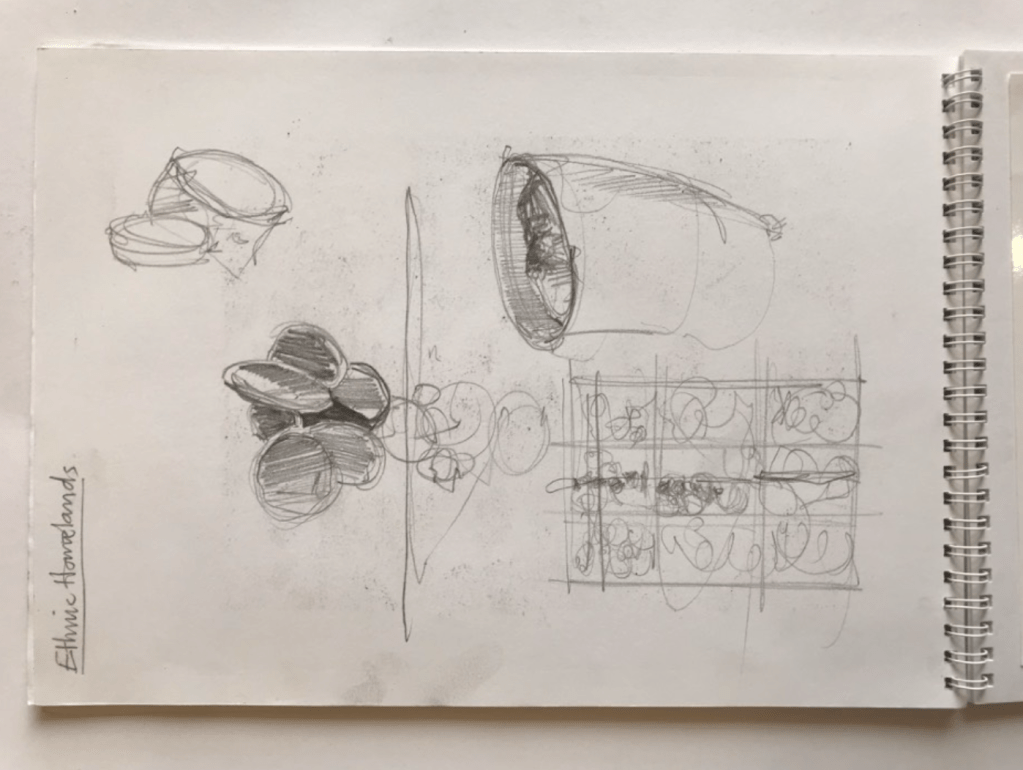
    The colonial enterprise in all its vileness is well documented and we are all part of an ongoing process of facing its consequences. Whilst I hope that my work contributes in some way to this process, it is not my primary intention. My main interest lies with the boundaries themselves, their nature as obstacles, markers and indeed passages. A few sketchbook pages are included below as conclusion.

    Greg Shaw,

    14 April, 2021

    1. Ajala, A. 1983. Africa Spectrum: “The Nature of African Boundaries”. Africa Spectrum , 1983, Vol. 18, No. 2 (1983), pp. 177-189. Sage Publications, Ltd. [O]: Available at: https://www.jstor.org/stable/40174114 (Accessed 10 February 2021). 
    2. Best, J. and L.M. Zinyama, 1985. Journal of Historical Geography: “The Evolution of the National Boundary of Zimbabwe” (p419-432) [O].  Available at: https://www.sciencedirect.com/science/article/abs/pii/S0305748885801018 (Accessed 2 February 2021).
  • Outlines and Outlines

    “Just as none of us is outside or beyond geography, none of us is completely free from the struggle over geography. That struggle is complex and interesting because it is not only about soldiers and cannons but also about ideas, about forms, about images and imaginings.” 

    Edward W. Said, Culture and Imperialism

    I am not sure exactly where this line of posts will lead. It is my intention over the next few uploads, to discuss the beginnings of the work that has occupied me so far this year, and the some of the ideas and concepts underpinning these. I am looking backwards as I write, because already my ideas and work are some distance from these beginnings and the initial thoughts that will follow. It is my hope to write a series of shorter posts over the next months as I work through my ideas and the way they manifest themselves within the work.

    Within recent works, there is the carrying forward of the materials that have occupied me for a few years, such as mud, wood, wire, aluminium, paper and nails (see Legacy: The Red Fence, (2017)), references to territory, land, power and conflict, but also the introduction of new media derived from the concepts. I am continuing to interrogate aspects of territory, boundaries and structures, but turning my focus to the perimeter of Zimbabwe. The manner in which these boundaries were drawn, have come to be accepted and have agency on the present nation-state is a vast, complex and multi-layered field of enquiry, and there is a need to treat it with sensitivity.

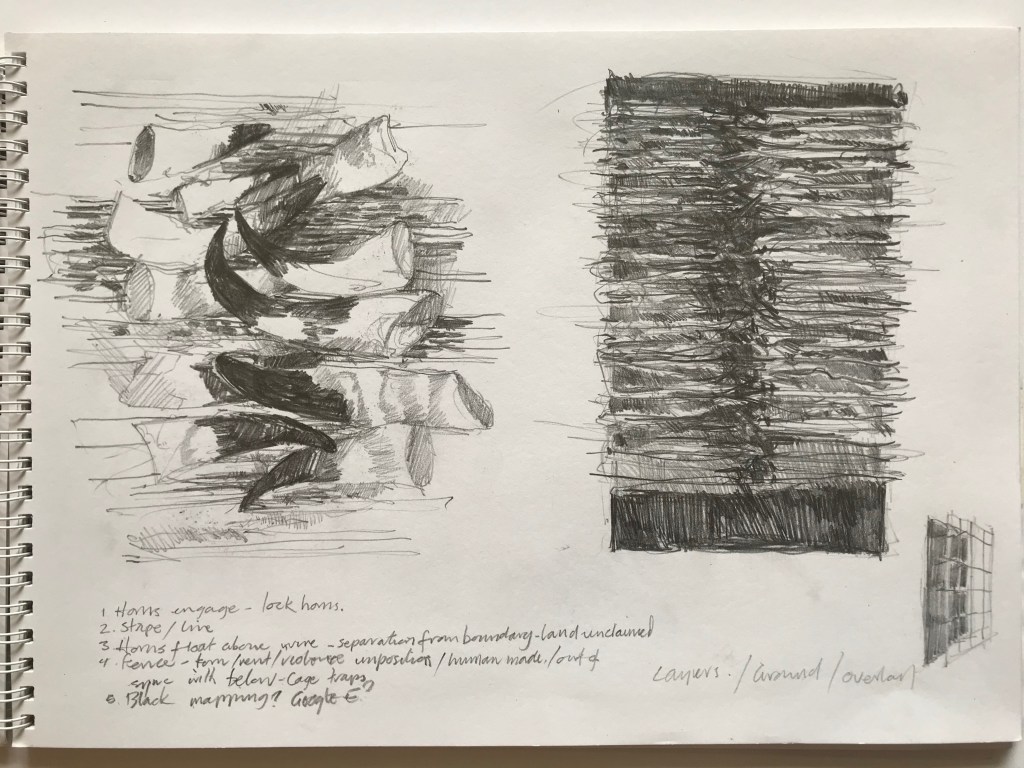
    The initial works in progress are labour intensive, but I am happy with the results so far. For now, a few sketchbook pages.

    Greg Shaw,

    6 April, 2021

  • Musings and Manifestos

    “There’s more beauty in truth, even if it is dreadful beauty.”

    John Steinbeck, East of Eden

    The works Manifesto (I and II) were created in June and July of 2018 for the FNB Joburg Art Fair, where they were exhibited with Village Unhu. They were re-shown at Gallery Delta in the exhibition State of Mind (November 2019). At the end of what has been one of the most difficult years of our post-independent history (there are a few to choose from…), I thought it was appropriate to write a post about these two pieces and think about the interim time between their origin and the present. I spend a lot of time discussing and analysing the work of other artists with my pupils, and a lot of time writing statements about my own work, and although the processes are similar, the language and phrasing is different. Looking from inside is not the same as from the outside; it is different finding meaning from that viewpoint. I imagined discussing the work with my pupils, and thinking of it as another artist’s. I thought they would surely be able to find some meaning. After all, they have been well taught.

    I would remind them of course, that meaning is not contained within an artwork like some coded message – that indeed, the spectator brings meaning to the work, it is a collision of their own thoughts, their own ideas, their own context, and the artwork.

    I would begin by discussing the title, Manifesto. They would respond, noting that the word typically refers to a document expressing ideals and aims. The form of these works, I would observe, unstretched canvas and scroll-like, echoes this idea, something that can be rolled, transported and is documental in nature. I would ask my pupils to note the date that they were created and place them in the context of that time, understanding that is essential to thinking about any piece of work. I would ask them to suggest how they might find a manifesto at that point in time, to what might it refer, and in which case, how might these works be read? They are clever, my pupils, and would surely posit numerous ideas and starting points which could be discussed – many, I think would correspond with my own observations.

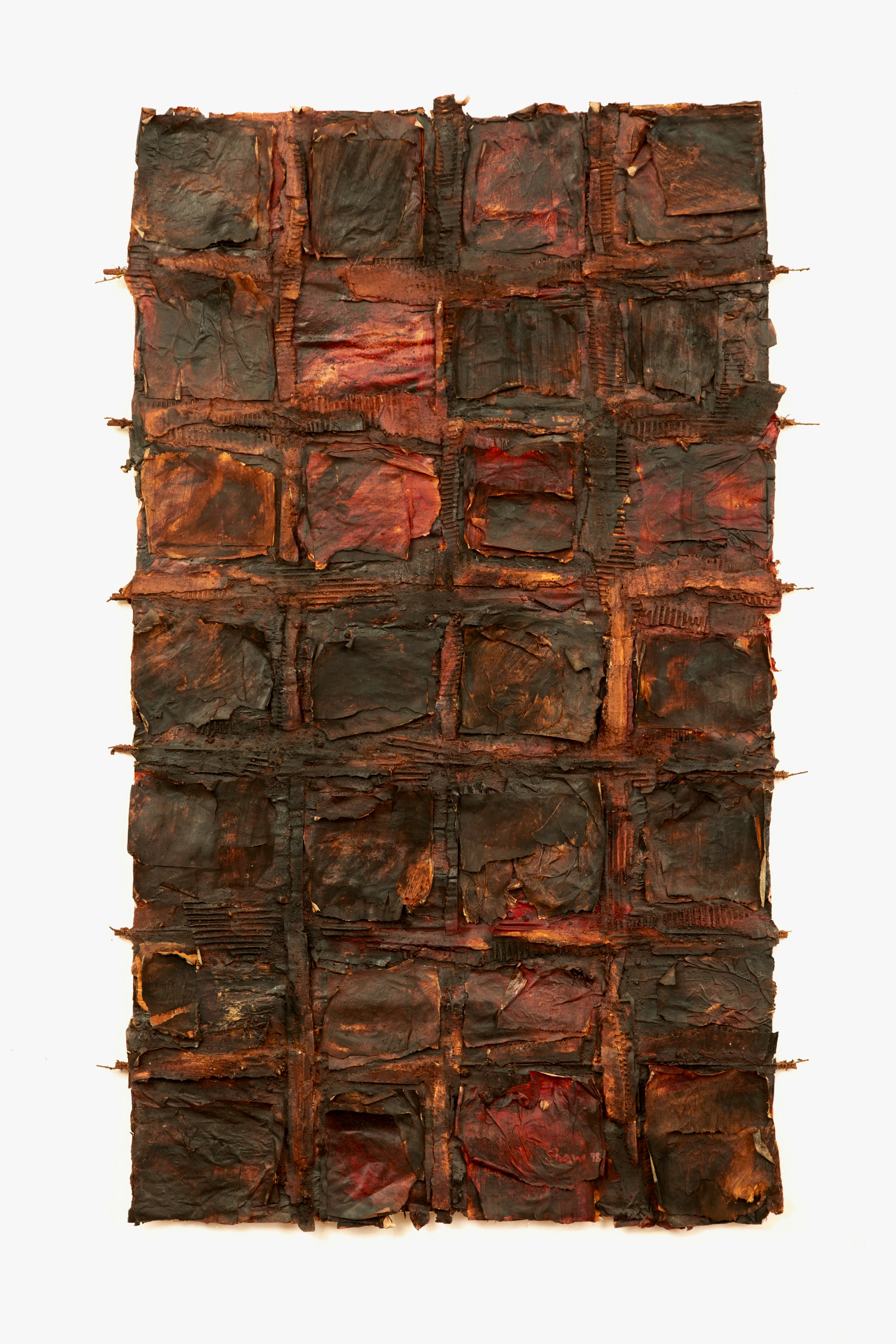
    “Manifesto I”, 2018. Oil, Paper, Soil and Wire on Canvas. 140 x 100cm. (Photograph, David Brazier).

    There is both a warmth and a darkness about the works, someone would note, and they are both characterised by a regular grid like structure. Another may add that within Manifesto I, the horizontal structure is created with barbed wire, mostly painted red. I may add to that, pointing out that Shaw employs and refers often to wire and fences. We would pause there for a while and discuss the attributes of those elements – boundaries, divisions, markings. Many are simple, practical structures that mark agreed boundaries. Others may suggest containment, violence and entrapment – we would discuss the nature of wire and the symbolic references that it might contain.  We might ask why these layers of fence, of barbed wire fence, form the structure of this work.

    I always find it rewarding that when you stop them – the pupils – at a work in a gallery, and begin a discussion, they get deeply involved and begin to look and think carefully, and many are not only highly intelligent, but insightful too. But it takes the actual stopping of them to make them look. Like all of us, they are flooded with imagery every moment of their lives, and seldom stop to think about these images and others that may hold considerably more than they think. One would definitely notice the fact that the wire is painted red. Not necessarily significant, but I would judge their mood – if they were focused, I would suggest that it is possible that the work could be read in conjunction with Red Fence (2017). They wouldn’t necessarily know that work, but with technology it could be brought to the lesson instantly. What is unusual about Red Fence, I would point outis the manner in which it is dated; day, month, year – in contrast to every other Shaw work which is dated simply by year. They would latch on to that date – many of them have photographs (previously unimagined images which proliferate their timelines). “It is a mark”, they might conclude, “a mark of an ending – and a beginning”. Connecting these aspects, it’s possible that they may conclude that the red wire of the work Manifesto I could be significant, in that it refers to a specific point, or past ideologies, or histories of successes or failures and the derailing of ideologies.

    They would observe that the structures of Manifesto I are less uniformed than the other work – the vertical lines of soil allow for more movement along these axis, and how there seemed to be seepage of paint under and inside the soil ridges. I would hope to extend their thinking about this and would ask them to talk about the way in which the work had been created, look at the materials, – think how it was created and about the significance of these. One might describe the surface as being created partially with elements of tissue – stretched extremely tightly, skin-like – very visibly fragile. In comparison to the second work, this has more life, there is a rawness and in parts where the skin-like surface has been ripped, there are visual references to a rawness, red, almost blood-like interior – quite obvious I might interject, but possibly so –  in parts they might add, there has been an ebb, wounds unhealed, scars unformed – histories of violence. These would be good observations, connecting the visual and visceral elements of the work to the framework they may have originally suggested. I would compliment them – I hope they would feel my investment in reading the work. I find they get really “in to it” when they realise that they are not simply making stuff up, but are finding meanings and value in this world of visual art.

    “Manifesto II”, 2018. Oil, Paper, Soil and Wire on Canvas. 140 x 100cm. (Photograph, David Brazier).

    We would move on perhaps – time is always short. The second work, Manifesto II has a more defined grid-like structure, rough squarish shapes bounded by mud. “Shaw has often referred to his use of mud – in many instances it goes beyond visual and symbolic references and becomes simply what it is; a part of the land” – they would have picked this out of our earlier discussion about materials and meaning – they would have had a chance to glance through some of the links when we brought the other work into the lesson. It might be possible to read this piece as a type of calendar, each square referring to a metaphorical event, or time? That would be an interesting interpretation, I would think – I might add that in this regard, the work becomes a record over a period of time – not necessarily the land, but perhaps the structures imposed upon it? – blackened, burnt, fragmented, decayed – remnants of the past contained in a work outlining the future. I might ask them to verbalise a sense of the work – “The light is old, reddened, tired, containing the ashes and embers of something that once was. The surface has less of the life of the first work, it has been rendered brittle, dried, flaking. As it peels, it reveals layer and layer of the same. As much as it is an empty vision of the future, it is the record of a broken past. It is not a work that breathes life, it is a work that records a history of decay and death, and a work that predicts more of the same”, they may suggest.

    There is never enough time at the galleries, or in the lessons. If a discussion began like that, it would be a good starting point. It is obvious that that there is not a single possible interpretation, but that their ideas are sound, and that they can be investigated much deeper – there is so much more to this reading. And I would go on; I would re-emphasise that an artwork is not a dead thing, it lives and evolves with us and our time. It is not enough to see it as a static thing. What now of our time? What of the period between these works origin and the present? What water has flowed under the bridge? How should we mark those that have died? How are we to understand the silence, and where have our jesters gone? Where is the music? What should we make of the literal and metaphorical darkness that descends on our land, hour after hour, day after day? How now, do we see this manifesto?

    “But Sir,…”, one might say: “We noticed there was both a darkness and a warmth, what should we make of that?” “And look at the soil – the literal element, the land worked into the piece – some of it is stained and burnt, some of it bloody but though small, there are parts untainted, unstained, that are rich, vibrant and contain life. There are remnants unbroken, there are seeds. Though it is an ocean of despair, there is hope.”

    There is always hope.

    Greg Shaw,

    31 December 2019.

  • Rembrandt @ 350

    350 years after Rembrandt’s death, the forces of light and dark that he seemed to wrestle with in so much of his work (both literally and metaphorically) seem to be overtly present in our current context. It was with this in mind that I approached the work I produced for the exhibition Rembrandt @ 350, at the National Gallery of Zimbabwe, in conjunction with the Netherlands Embassy. Artists were invited to respond to specific work of the Dutch Master and submit for selection. Of the two works I created, one was selected for the exhibition (in my view, the stronger more challenging of the two was omitted). This is the second time I have worked in response to Rembrandt, and it was interesting to me that the work was considerably further removed from the originals in comparison, this time conceptually heavier, driven by the nature of our current context. The exhibition first appeared at National Gallery of Zimbabwe in Harare, and has now travelled to the National Gallery at Bulawayo where it hangs until 20th December. Below are the two works created and the texts that accompanied them.

    Greg Shaw,

    3rd December 2019

    Wrestling with the Darkness

    Wrestling with the Darkness, 2019. Oil, Tissue, Bitumen, Wood and Wire. 200 x 150cm

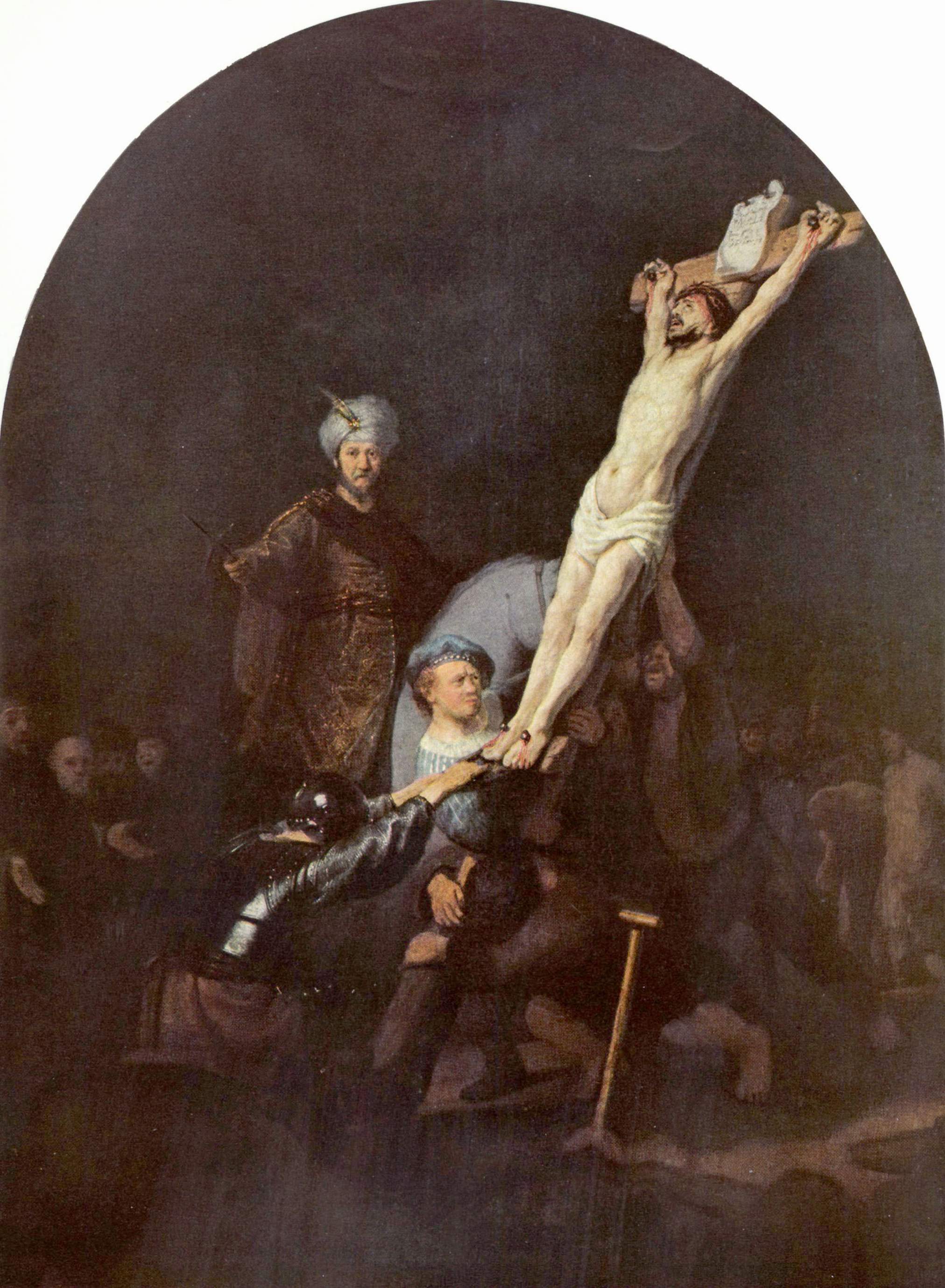
    This work considers the small but intense painting, The Raising of the Cross. Rembrandt paints himself participating in one of the most prominent moments of Western texts, an event that simultaneously embodies the inter-related, extreme poles of evil and righteousness. He seems to be wrestling with these forces and it is written into every aspect of the work. He paints an alter-ego, staring out of the space at his actual self – the painter, staring out at the viewer. An acknowledgement of a shared presence, a shared participation, a shared culpability. You, as much as I, have within you the potential for immeasurable harm and immeasurable good. These are our actions, this is our world, this is our darkness, you, and I are part of this great evil, this great sacrifice – you, as much as I, are the reason for this necessity.

    The Raising of the Cross, 1633.

    Of Rembrandt’s paintings, this composition is perhaps the most striking for its discomfort and unease. It is startling in its tension and its ability to disturb: The weights are not balanced, the diagonals not resolved, the colours disquieting. The figure of Christ appears more human than deity; diminished, undignified. He stares to the void on the left: The past; histories of darkness. This moment is prior to the call to His Father, prior to the Centurion’s piercing, prior to the final tearing of the temple veil. This moment is the embodiment of chaos – the collision of light and dark. 

    I have chosen to respond significantly larger than the original work, endeavouring to evoke a similar sense of unrest and distress, I hope to have achieved a sense of the immense struggle of Rembrandt. There is little reference to the figurative details of the composition, rather, a consideration of the structure in an attempt to retain the sense of chaos. The materials I employ are those I have been using in recent months. They speak to the matrix that surrounds us; that of control and fragility. This work aims to reflect the great forces at play in our own context. Those forces aiming to wrestle the chaos, the darkness, the despair, into some state of order.

    The Redeemer Unseen

    The Redeemer Unseen (Studio photograph), 2019. Tissue, Bitumen, Wire and Steel. 148 x 200cm

    This work considers Rembrandt’s Christ on the Cross (1631), a small, very powerful work in which Christ hangs illuminated in the visual and metaphorical darkness. I am captivated by the manner in which Rembrandt strips every extraneous consideration apart from the figure of Christ who seems to have lost connection with the terrestrial context and by virtue of the carefully balanced composition is suspended timelessly, endlessly. His isolation seems absolute, His illumination other-worldly. Unlike The Raising of the Cross, this Christ is deified; transcendent. We do not look from below, as may be expected, but at eye-level with Christ. We are drawn to consider the righteousness of the sacrifice.  We are called to confront ourselves and consider, what is the nature of the redeemer. How does this figure confront/transcend the darkness that surrounds him.

    Christ on the Cross, 1631

    I have worked considerably larger than the Rembrandt painting with the intention to draw the spectator into the work – rather than contemplating the sacrifice from afar. The Christ figure is unseen, and a view of the structures underpinning the darkness is visible. The viewer is challenged to consider the nature of these structures and the nature of the darkness itself and how they may respond in their own context. I have employed the materials that have intrigued me in recent months – those that suggest violence, demarcation, protection, division and control, as well as those that evoke aspects of fragility and temporality. 


  • The Fireman’s Knife

    A Tribute to My Father

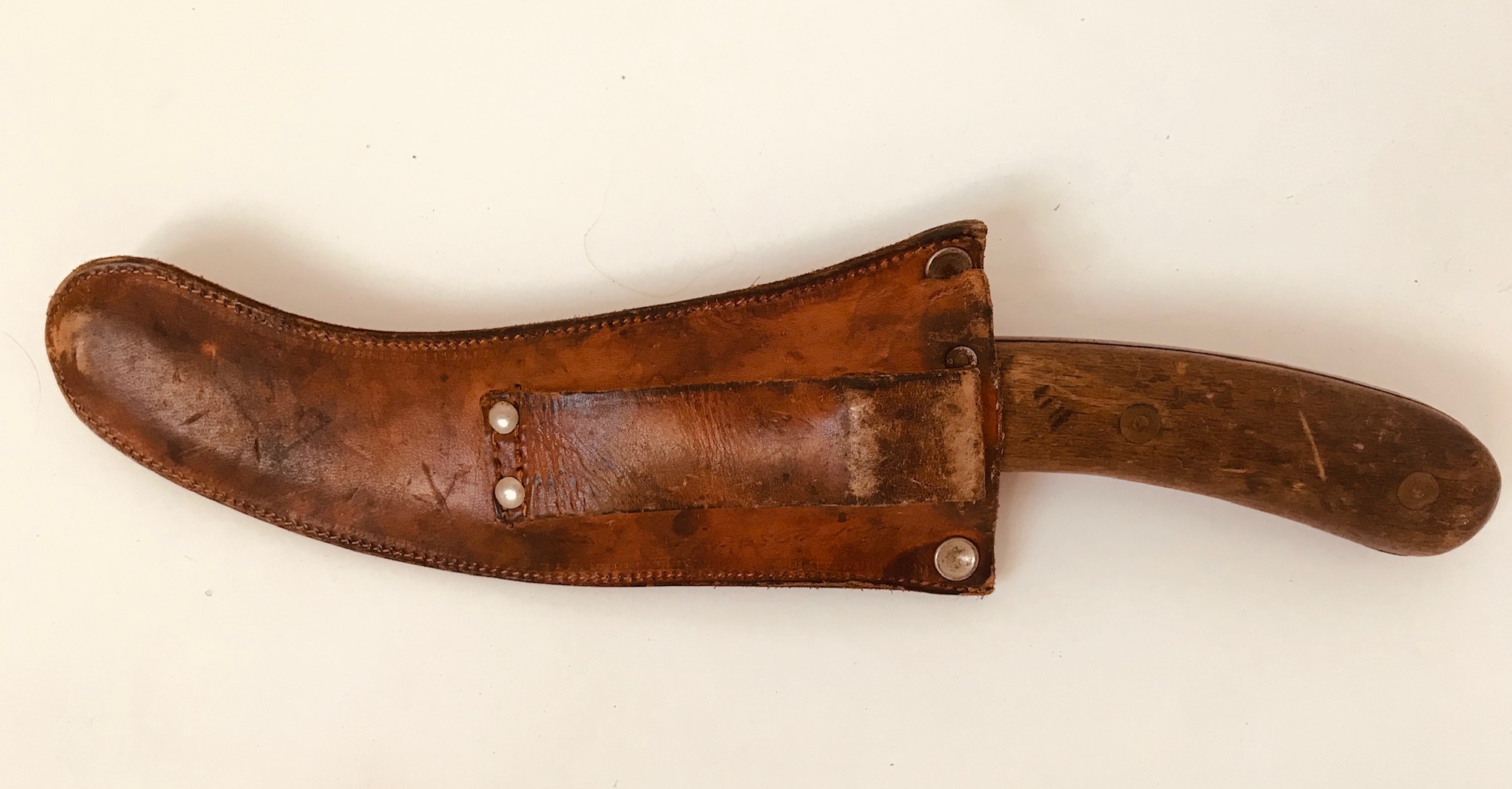
    I have a specialist knife that belonged to my father. It is a sort of flattened “S” shape, with a handle at one end and the blade on the inside curve of the other, like a sickle. It has no sharp point, just a rounded, curved, protected end. It is held by a broad, curved sheath with no clips, so that it can be quickly and easily used.

    It is a Fireman’s knife, and its job is clear. You can imagine it being used to cut a person’s belt, for example, but without inflicting any other damage to any part. It is a sharp, indispensable tool, there when you need it the most, and it does no harm. In my mind, it is symbolic of my dad.

    He was there when you needed him, he was sharp, quick witted, reliable, protective, and he did no harm. It seems to me that if you can go through your life doing no harm, that is a very good place to begin. He was kind, generous with what he had, considerate of people and always willing to give his time to assist wherever there was a need. He was without malice, patient, slow to anger and above all, a man who loved and strived for peace around him.

    As you might have guessed, he was at one point in his life, a Fireman. Perhaps one of the most noble of professions, with the potential for the literal sacrifice of the self, for the sake of others. I think it was a principle that guided my father in relation to his family. He did not pursue his own interests at the cost of us, indeed, he went through his life with the good of his family motivating his actions, with mum at the pinnacle.

    He was a man of gentle, albeit slightly off-kilter humour and unusual skills. He could blow pipe-smoke into ant holes and make it appear elsewhere in the garden. He could solve complex puzzles, both physical and cerebral and could balance a teacup and saucer onto the firm mound of his belly. In later years he became a skilful photographer and somehow, from a very non-alcoholic background, he learnt enough about whisky to run the “tastings”, convincingly, and with great mirth.

    He was a master driver, demonstrating this through avoiding collisions on more than one occasion (a necessary skill for this part of the world). The pinnacle of this talent was perhaps the fleeing from a herd of very-angry elephants. The blinding display of expertise saw my father reverse a Zebra Van down a windy, tree-lined dirt road at considerable speed until, to the relief of the panicked family we had successfully fled from the wall of charging beasts. It remains an act of heroism that has imprinted my mind, forever.

    As much as he loved his family, mum was the centre of his world. His loyalty to her was beyond description, we all knew that. He would have followed her to the end of the world, but it was to Scotland that they travelled where they rebuilt their life. As long as he was with mum, he had the world.

    The man I found conducting whisky tastings at the lodge (with maximal enjoyment by myself, the patrons and seemingly my father) was not the same man I remembered leaving Zimbabwe. He had been renewed by Scotland and her people and I am forever grateful to that country and community for this. But I do not forget that it was this brutal and beautiful country Zimbabwe that forged the man that he was and know that these are two sides of the same coin. The qualities so  prominent in dad, honesty, integrity, peacefulness and intolerance of wrong, are those I will search for in myself, and hope to have inherited. 

    I will be forever proud of you, and proud to be your son.

    Gregory